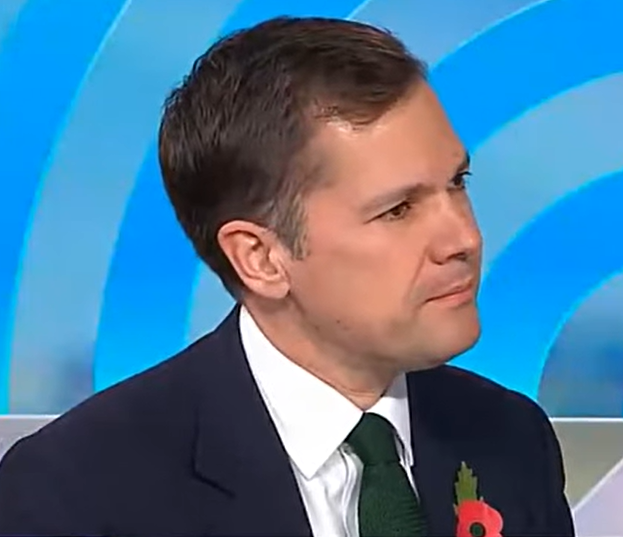
Robert Jenrick is not a happy chappy. His party is dipping in the polls, he’s being , and he made a complete and utter tit of himself on the airwaves over the weekend. In an with Fraser Nelson on Sky News yesterday, Mr Jenrick was asked about his comments pertaining to the highstreet chain Poundland.
Poundland needs no introduction. An idea to be marvelled at rather than a location to be explored, many a Brit’s childhood was characterised by a sense of naivety relating to the fabled highstreet chain.
You’d wander into your local branch, only to be left in a state of extreme despair when you scan the shelves and realise that the vast majority of items were, in fact, not £1. You felt betrayed by the experience, having been lured in by the big fat ‘£1’ sign on the shop window. And yet, for some inexplicable reason, you returned some time later. You simply couldn’t stop yourself.
It is a matter of national emergency, then, that Poundland has since fallen on hard times and needs a lifeline. Despite having close to 12,000 workers, 600 stores and a like-for-like sales rate of 8.4 per cent, the bargain-lovers go-to store is hemorrhaging cash. The outlet is losing roughly , and looks set to enter bankruptcy if trends continue.
Fortunately for those concerned, in his interview yesterday Mr Jenrick provided a solution to Poundland’s woes. The answer, he said, lay in government intervention. And, despite being challenged live on air over such a position, opted to double down after the debate, writing on “the government should be doing everything it can to keep Poundland alive.”
This is, one should note, the same Robert Jenrick that once boasted of naming his daughter after the . The same Robert Jenrick who bragged of how his “economic vision is shaped” “Dad’s small business” enterprise culture Thatcher created in the 80s.”
Where on Earth has that iteration of Jenrick scuppered off to? Has he been gagged by Reform? Is he being told to peddle whatever the polls suggest is the most popular opinion of the day, rather than holding any actual beliefs? One thinks the answer to both of those questions is yes.
Now, there is a very real chance that I am being unfair to Jenrick. He could’ve met his wife down one of the aisles, or perhaps he has fond memories of buying a pack of double A batteries as a kid. I don’t know. But no matter Jenrick’s association with the shop, I struggle to comprehend as to why Poundland’s survival should be a matter for government involvement.
And this is the real crux of the matter. Jenrick is desperate to take to the morning round and show off to everyone why Reform can be trusted with the keys to government. He is eager for the public to see him as the responsible guy. The one who holds the public purse and dishes out the cash. But this episode reveals a rather large flaw in that image, because it suggests that Reform’s view of economic matters is that the government should be the ones who decide who wins and who loses.
It means that one is forced to question where the enthusiasm for state intervention ends. Under a Reform-led Treasury, will every business that succumbs to bankruptcy be bailed out at the taxpayers’ expense? Will Jenrick be gallivanting around the country, handing out cheques to any business that is even the slightest bit in the red?
Jenrick’s logic appears to rest on the fact that “every high street in the country has” a Poundland. Therefore, it should be bailed out. I need not tell the readers of the flaws with such reasoning. Does he really expect such a mindset to withstand the reality of public finances and tight-fisted treasury stooges? No responsible government can offer a bailout to company that falls on tough times. It’s little more than populist guff.
Despite my tone, I really don’t want Poundland to fail. I’m not some sick-minded sadist. Tens of thousands of people rely on the company to make a living, and highstreets are better off with an affordable shop for people to turn to. But if the market deems the company uneconomical, then, as harsh as it may sound, so be it.
Britain should have a business environment that rewards risk and entrepreneurship. And yet, Reform want to have you believe that if a company teeters on the brink of bankruptcy, then the onus should be on the government to bail them out. That is not a system that rewards ingenuity, but one which safeguards mediocrity.
I am beginning to harbour suspicions that Reform don’t actually have an ideologically consistent policy platform. Their beliefs seem to be grounded in an ideological framework I would term as ‘Pollism’ – . There is no actual belief behind their ideas, nor is there any philosophy to be anchored to. If the polls say that something is popular, then that becomes the policy of the day. The highest levels of stress-testing each policy proposal encounters is if it is present on both a and a poll.
It might seem a petty criticism to levy, but the reality is that yesterday’s debacle with Poundland reveals a core ideology which is at best inconsistent and, at worst, hypocritical. Reform once boasted of how Britain “needs more Thatcherism”, and yet now they seem in hock to the teachings of Marx and Engels. That is not because Reform have had a change of heart. It is because the only thing they believe in to any degree of consistency is what wins them power. And that is no way to run a political party.