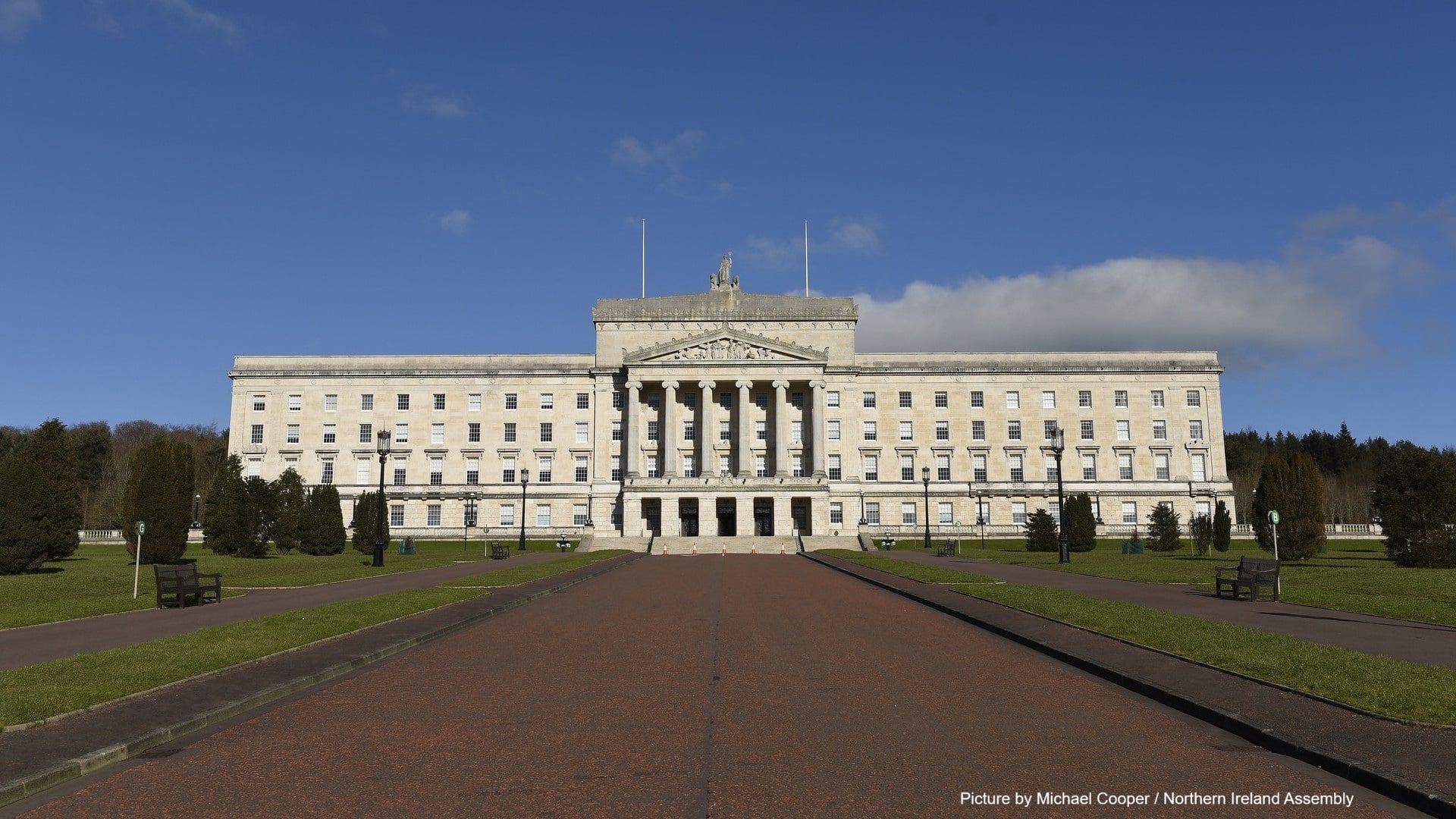
Conor J. Kelly and Colin Murray discuss what would happen next if one of the major parties pulled out of the Stormont institutions.
The latest knock to Northern Ireland’s fragile political system has come from a very old dispute. The Protestant Orange Order’s march from Drumcree Church near Portadown, passing the largely Catholic nationalist Garvaghy Road, was one of the most serious flashpoints of the Troubles, reaching a particularly violent apex in the mid- to late-1990s, when several people were killed and seriously injured in rioting and paramilitary attacks. The sectarian nature of the dispute poisoned politics at the time, seriously jeopardising the nascent peace process.
Since that time, the Parades Commission of Northern Ireland has repeatedly determined that the Garvaghy Road leg of the march should not proceed, leading to an uneasy but peaceful settlement that lasted 28 years. However, under fire after procedural errors over these decisions, last Friday afternoon the Commission permitted a scaled-down group to march that segment of the route on Sunday morning. This decision has suddenly catapulted the issue to the fore, with Irish Taoiseach Micheál Martin describing the actions of the Commission as ‘incomprehensible and wrong’.
A series of late-night court hearings and appeals culminated in a standoff on the road beginning at 4 am on Sunday morning, as local residents blocked the street, refusing to allow the Orange Order to pass. Even though the courts did not find a reason to quash the Parades Commission decision, they were highly critical of the truncated period between the Commission’s determination and the date of the proposed march.
Standing with the marchers were unionist politicians, including DUP leader Gavin Robinson and local MP Carla Lockhart. Among the Garvaghy Road protesters were Sinn Féin’s Dublin-based President Mary Lou McDonald, the SDLP leader Claire Hanna MP, and, most importantly, First Minister Michelle O’Neill (also of Sinn Féin).
The presence of the First Minister in particular caused outrage among political unionists, who argued that the march was legally permitted, while the blocking of the road was not. They have accused O’Neill of giving ‘two fingers’ to the rule of law by taking part in that protest. The legal arguments around the counter protest, however, are not resolved by a simple reading of the Public Processions (NI) Act 1998, as that legislation must be interpreted in light of the protections for the freedom of assembly.
For her part, O’Neill said the ability of the protesters to block the road was ‘another victory for this community in standing steadfast for the right to live free from sectarian harassment and intimidation’. Politicians across the spectrum, including the Prime Minister Andy Burnham, urged calm. Meanwhile the Secretary of State for Northern Ireland Chris Bryant left the Labour Party conference early and criticised those blocking the road, while also facing criticism for not responding to the crisis quickly enough. The immediate stand-off is now over, though the Orange Order and the crowds have not dispersed, despite the Police Service of Northern Ireland saying they would prevent the march on public safety grounds.
An election to the Northern Ireland Assembly is due in May 2027, but many commentators now suspect that this dispute will lead to one of the two major parties resigning either the First or deputy First Minister roles, precipitating another crisis for the Executive. In Northern Ireland’s power-sharing system, the First and deputy First Minister occupy a joint office, with Sinn Féin and the DUP essentially wielding a veto over the formation of a devolved government which can be exercised by one of the two parties refusing to nominate someone to the First Minister or deputy First Minister positions.
The next election will now almost certainly focus upon the Drumcree dispute. However, in all likelihood, it won’t come any time soon, even if one party leaves the Executive this week, unless the major parties collectively push for an early election. Under the terms of the Northern Ireland (Ministers, Elections and Petitions of Concern) Act 2022, the collapse of the First and deputy First Minister’s joint office would not immediately halt governing functions. If either Sinn Féin or the DUP refused to engage, the other Executive ministers could remain in their departments in a caretaker capacity for up to 48 weeks, which would cover the entire period between now and the scheduled May election.
The remaining ministers could continue the day-to-day running of their departments, but with more limited powers and greater difficulty taking major decisions that would normally require Executive agreement. Legislation already before the Assembly could continue to be considered. The result could therefore be a prolonged period of semi-functioning government: Stormont would continue to operate, but without a functioning First and deputy First Minister. The idea was to give the major parties a cooling off period after the crisis and an opportunity to negotiate a way back to power-sharing. But some crises are bigger than others, and the ‘Drumcree election’, whenever it comes, will only harden divisions in Northern Ireland.
The current tensions are so severe that the more pressing question has become whether an Executive could ever hope to be formed in the aftermath of such an election. If the Drumcree dispute remains unresolved and the parties have spent months publicly attacking one another on social media and the airwaves, agreement will become very difficult. Again the 2022 Act comes into play, and the parties will have 24 weeks after the election to find agreement with the remaining ministers keeping their portfolios for this period.
Running parallel to attempts to get the major parties to return to the Executive table will be a larger debate about reforming Stormont to attempt to make the institutions more resilient to political shocks. Since the institutions were established in 1999, they have been non-operational nearly 40% of the time, including two prolonged periods since Brexit (2017–2020 and 2022–2024). Several parties have now indicated a willingness to loosen some power-sharing mechanisms, but there is little agreement on a pathway forward.
Meanwhile, the public in Northern Ireland increasingly, and reasonably, demand stable and effective devolved government. The situation over Drumcree came as a relative bolt from the blue to shock the system in recent weeks, but the crisis underscores the precarious nature of the power-sharing settlement in Northern Ireland and the need for the local parties, alongside politicians in London and Dublin, to address the long-running systemic issues at play.
Dr Conor J. Kelly, Bingham Fellow in Constitutional Studies at Balliol College, University of Oxford, and , Professor of Law and Democracy at Newcastle University. They are both part of the ‘Constitutional Futures’ project at ARINS: Analysing and Researching Ireland North and South.