As part of our Policy Landscape 2026 report, Anand Menon considers the state of the political debate and the immediate and long-term challenges that need to be confronted when it comes to UK foreign policy.
Keir Starmer was generally thought to have handled foreign policy well, albeit ‘never here Keir’ was criticised for devoting too much time to international matters. In his defence, his premiership coincided with a period of profound international instability and a succession of challenges, including the need to deal with an unpredictable American President (who at one point seemed to threaten the territorial integrity of a NATO ally); to respond to crises in the Middle East and the Gulf; to rebuild relations with European partners; and to figure out how best to manage relations with China, both a major trading partner and a potential security risk.
But although Starmer proved relatively adept at reacting to, and managing, crises, what he signally failed to do was address the difficult choices increasingly confronting the UK: relating its key relationships and the challenges confronting a medium-sized power in a world dominated by competition between continental-sized economies.
We currently know very little about the intentions of his successor. Andy Burnham has no track record when it comes to foreign policy, and has been keen to stress that his focus will be on domestic issues.
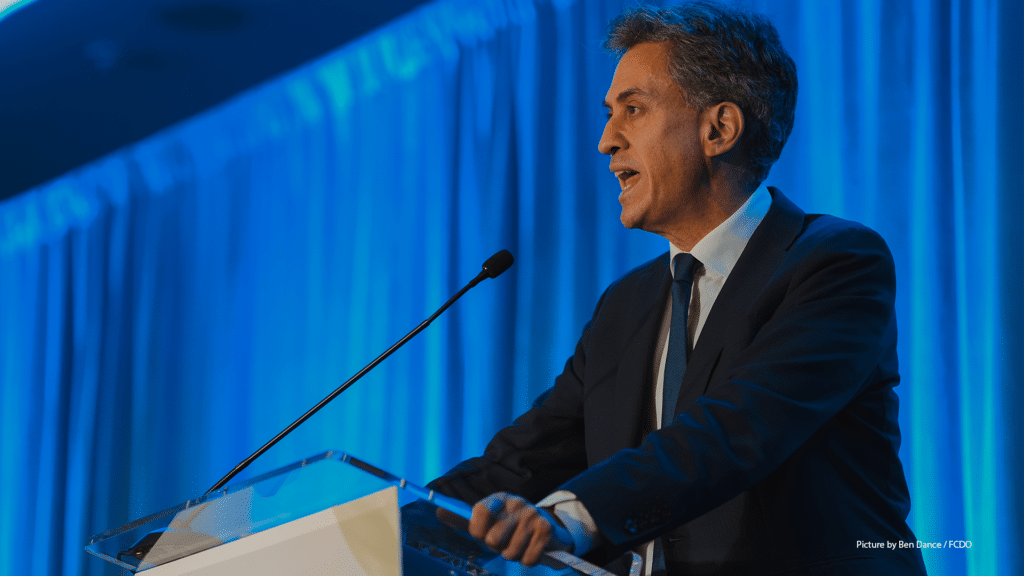
New Foreign Secretary Ed Miliband has stated he intends to put the climate crisis and international development at the heart of his foreign policy (under Keir Starmer, aid spending was reduced from 0.5% of GNI to 0.3%, with a large proportion of that devoured by domestic spending on refugees). In his inaugural remarks to Foreign Office staff, he emphasised values and international law as much as he did UK national interests.
What is less clear is whether the new Prime Minister shares these liberal internationalists values, and whether, if he does, a focus on law, climate and development is feasible in an international environment increasingly characterised, as John Bew has argued, by raw power.
Foreign policy is not a decisive issue in UK politics. Under Starmer, there were occasional political spats over specific issues such as the deal ceding control over the Chagos Islands and relations with the EU. There has been more sustained debate over his attempts to foster close relations with the Trump administration. The Liberal Democrats have called for the UK nuclear deterrent to become entirely independent of US technology, have introduced proposals to block US interference in UK politics, and have demanded that the UK withdraw consent for the US to use military airbases in the conflict with Iran.
On the other side of the political spectrum, Nigel Farage has, as I noted in this report last year, had to row back somewhat on his earlier enthusiasm for emphasising his close relationship with the US President, while early attempts by the Conservatives and Reform UK to attack Keir Starmer over his failure to support the US war with Iran proved short-lived (and ill-judged).
The Green Party had seen its membership numbers surge, partly because of dissatisfaction with the Starmer government’s approach to the occupation of Gaza. Yet the party is struggling to define foreign policies to attract floating voters and withstand the more intense scrutiny to which it is being subjected. There is the prospect of bitter fights at its autumn conference as members seek to update positions on issues such as defence spending and NATO.
Both the Conservatives and Reform UK have been critical of what they see as insufficient progress towards raising defence spending, with Kemi Badenoch offering to work with Starmer or his successor to legislate for welfare cuts to fund higher spending.
The immediate issues confronting the government centre on the trade-offs necessary to meet its defence spending commitments, and the need to consider whether and when to reschedule the UK-EU summit that was postponed in July, while beginning to plan for the UK’s Presidency of the G20 in 2027.
Longer term, reconciling means and ends will continue to be a challenge in a time of heightened fiscal pressures. Meeting existing pledges on defence spending will necessitate some compelling arguments as to why scarce resources should be spent on international as opposed to domestic priorities. Former Foreign Secretary Yvette Cooper had begun to argue that “effective foreign policy is domestic policy”, but a more concerted effort to emphasise the importance of foreign policy will be required should the government be serious about attaining the target of spending 3% of GDP on defence during the next parliament.
Development assistance will also be subject to fiscal pressure, not least given the rhetorical emphasis placed on this by the new Foreign Secretary. Initial indications are hardly encouraging for Mr Miliband. The new Prime Minister funded his £2 cap on bus fares by changing international climate donations – largely intended for the poorest countries – into repayable loans. It has also been revealed that Kirsty McNeill, aid minister, will not attend cabinet as her immediate predecessors did.
The government will also face pressure to formulate a more strategic response to a rapidly shifting international environment. Outside the European Union, Mr Burnham will have to calibrate his approaches towards the US, EU and China, conscious not only of the need to avoid excessive dependence (on China for critical minerals and on the US and China for key technologies), but also of the ways in which policies towards one might impact on the attitudes of the others.
There are clear dangers for the UK in excessive dependence on a less than reliable United States. President Trump’s unpredictability has sparked conversation among European allies about how they might compensate for a less reliable US security guarantee – conversations the UK will need to work harder to participate in fully as a non-member state. At the same time, growing tensions between the EU and the US might force the UK into the kind of choice between the two that post-war British foreign policy has attempted for so long to avoid.
“Our purpose is to shape the world, not to be shaped by it” declared Yvette Cooper in a speech at Chatham House. This is all the more important when the domestic impact of ‘international’ events such as the wars in Ukraine in the Gulf are more apparent than ever. The ultimate danger, however, is that, in a world increasingly shaped by the interactions of continental-sized blocs, and in which the post-Second World War liberal international order seems to be under increasing strain, even a relatively influential middle power such as the UK risks being unable to do so.
Anand Menon, Director, UK in a Changing Europe.