Andy Burnham's plans to reform social care could cost far more than he is claiming and take "many decades" to be implemented, a leading expert has claimed.
told the Today programme this morning that he was "puzzled" by some of what Burnham said yesterday, and he implied that he was unconvinced by what Burnham was offering.
Dilnot, a former chair of the UK Statistics Authority, is one of the nation's leading economists and chaired a commission on social care reform for David Cameron's government in 2010. Although ministers were initially positive about his plan to cap the amount individuals can be required to pay for their social care, successive governments were worried about the cost and the plan was never implemented.
In his interview, Dilnot said that he did not understand why Burnham told the BBC yesterday that his plan would cost less than £18bn a year when what he seemed to be describing – an NHS-style care service, with care free at the point of delivery – would cost a lot more.
Dilnot said he was "puzzled" by Burnham's answer to the £18bn question because "if we were to make social care free in the same way that health care is largely free, then I think we will be talking about an amount of money well in excess of £18bn."
Dilnot said that making the English social care system similar to Scotland's – where personal care is free, but where people who need to go into a care home can still face huge costs for the accommodation element of their care – might cost roughly half of the £18bn mentioned. But that was not what Burnham seemed to be proposing, Dilnot said. He explained:
[Burnham] did talk about making social care free, and what he implied was that he wanted social care to be completely free.
And that's not at all the case in Scotland, where although the policy is called free personal care, we still have exactly the problem that Mr Burnham himself has talked about of people needing residential care faced with very substantial bills.
And so I think what he's really talking about probably is social care that looks very like the NHS, that will be entirely free.
What he hasn't described is how he would raise the funds that he would need for that, and that would be a very substantial sum of money.
Dilnot said that, when Burnham gave a big speech on social care just after becoming PM, he left the impression there could be legislation before the next election.
After yesterday, Dilnot said, reform seems further away. He explained:
It sounds as though there'll be some more details [of the plans] in the prime minister's speech tomorrow at his party conference, but I think even that will continue to remain vague.
I think what we learned yesterday was that, if anything, change is now further away than had been implied or suggested.
Dilnot also said the full reform proposed by Burnham could take decades.
I also think that there was an indication in what [Burnham] said that he's imagining something that could take many years, even many decades before it came to fruition.
So they are now, I suspect, looking at ways of beginning a move in this direction without imagining they can get there very quickly.
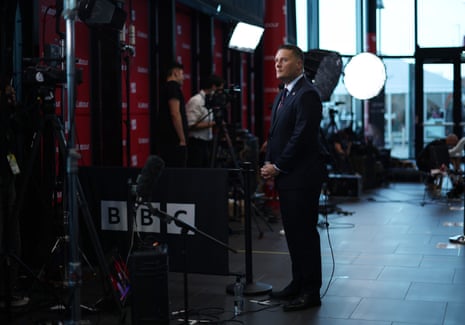
, the defence secretary, has been doing the morning interview round for Labour. Mostly he has been talking about the suspected bomb plot at RAF Fairford. is covering all the developments on that story on a seperate live blog.
Andy Burnham's plans to reform social care could cost far more than he is claiming and take "many decades" to be implemented, a leading expert has claimed.
told the Today programme this morning that he was "puzzled" by some of what Burnham said yesterday, and he implied that he was unconvinced by what Burnham was offering.
Dilnot, a former chair of the UK Statistics Authority, is one of the nation's leading economists and chaired a commission on social care reform for David Cameron's government in 2010. Although ministers were initially positive about his plan to cap the amount individuals can be required to pay for their social care, successive governments were worried about the cost and the plan was never implemented.
In his interview, Dilnot said that he did not understand why Burnham told the BBC yesterday that his plan would cost less than £18bn a year when what he seemed to be describing – an NHS-style care service, with care free at the point of delivery – would cost a lot more.
Dilnot said he was "puzzled" by Burnham's answer to the £18bn question because "if we were to make social care free in the same way that health care is largely free, then I think we will be talking about an amount of money well in excess of £18bn."
Dilnot said that making the English social care system similar to Scotland's – where personal care is free, but where people who need to go into a care home can still face huge costs for the accommodation element of their care – might cost roughly half of the £18bn mentioned. But that was not what Burnham seemed to be proposing, Dilnot said. He explained:
[Burnham] did talk about making social care free, and what he implied was that he wanted social care to be completely free.
And that's not at all the case in Scotland, where although the policy is called free personal care, we still have exactly the problem that Mr Burnham himself has talked about of people needing residential care faced with very substantial bills.
And so I think what he's really talking about probably is social care that looks very like the NHS, that will be entirely free.
What he hasn't described is how he would raise the funds that he would need for that, and that would be a very substantial sum of money.
Dilnot said that, when Burnham gave a big speech on social care just after becoming PM, he left the impression there could be legislation before the next election.
After yesterday, Dilnot said, reform seems further away. He explained:
It sounds as though there'll be some more details [of the plans] in the prime minister's speech tomorrow at his party conference, but I think even that will continue to remain vague.
I think what we learned yesterday was that, if anything, change is now further away than had been implied or suggested.
Dilnot also said the full reform proposed by Burnham could take decades.
I also think that there was an indication in what [Burnham] said that he's imagining something that could take many years, even many decades before it came to fruition.
So they are now, I suspect, looking at ways of beginning a move in this direction without imagining they can get there very quickly.
, the shadow chancellor, has accused John Healey of offering the Labour conference "reheated announcements" in his speech later.
Referring to Labour briefing overnight that three new floating docks will go ahead on the Clyde (see 7.54am), Griffith said:
These are more reheated announcements without clarity on where the money is coming from. Additional docks were announced months ago in the defence investment plan, which still has a £4.7bn black hole.
John Healey resigned warning that Labour's failure to fund defence was making Britain unsafe. Now that he is chancellor, he still won't fund the 3% target he walked out over.
Labour are running scared of making the tough choices needed to pay for Britain's defence. All they can offer is reannounced docks and more hot air from Healey.
Good morning. , the chancellor, is the main speaker at the Labour conference. He was a surprise appointment to replace Rachel Reeves, he is unveiling his budget four weeks on Wednesday, and some of the pre-briefing suggests when the budget does come, it will be a relatively low-key affair, with a lot of decisions postponed until the spending review next year. And so we are definitely not expecting huge announcements at lunchtime today.
But there will be some striking language. Healey is going to promise a "new age of industrialisation".
According to the overnight briefing from Labour, he will explain that in these terms.
My politics were shaped by the industrial heartlands of South Yorkshire. Today, on the site of the Orgreave pit, is Rotherham's Advanced Manufacturing Park. Our coal mines are not coming back. But this is how Britain's industrial past is being remade now for the modern world. This is the new age of industrialisation. A new confidence in Britain.
And he will also announce that the government is commissioning "three new floating docks for the Royal Navy's submarine service at HM Naval Base Clyde" to provide maintenance for nuclear submarines.
Known as Programme Euston, plans for the new docks were first set out in 2023 and are expected to upgrade Faslane's facilities for the next generation of British submarines, the Press Association reports. The Ministry of Defence has previously said they are expected to come into service in the early 2030s, and the docks form part of a wider £15bn upgrade programme for the Royal Navy's shipyards.
Here is the agenda for the day.
10am: The Labour conference opens. The first main speaker is Wes Streeting, the defence secretary.
10.30am: Ed Miliband, the foreign secretary, addresses the conference.
11.10am: Jonathan Reynolds, the business secretary, speaks at the start of a debate on workers' rights and reindustrialisation.
John Healey, the chancellor, gives his speech.
2pm: Heidi Alexander, the transport secretary, addresses the conference, in a debate covering transport and insourcing.
2.30pm: Yvette Cooper, the health secretary, speaks at an IPPR fringe event. Other cabinet ministers speaking at fringe events include Lisa Nandy, the culture secretary, at a Think Labour event; Pat McFadden, the work and pensions secretary, at an IPPR event; Streeting at a BAE event; and Ed Miliband, the foreign secretary, recording a What's Left? podcast.
After 3.20pm: Alex Norris, the justice secretary, and Shabana Mahmood, the home secretary, speak at the conference in a debate covering crime.
I'm afraid we are no longer able to have comments open below the line every day on this blog. If you want to contact me, please email politics.live@theguardian.com. You can use this email to flag up corrections, comments for publication, questions or complaints.