puts it to Burnham that, according to the Health Foundation, a system offering adult social care free at the point of deliver (like healthcare delivered by the NHS) would cost £18bn.
says the cost is "not that high" (ie, not as high as £18bn).
Q: So how much would it cost?
replies:
Not that high.
But can I directly deal with this issue of the costs?
Because it's as if there isn't a cost at the moment. There is a cost. People are paying care charges now. They are spending tens of thousands of pounds from their savings, sometimes losing their homes. That is what's happening at the moment.
So to suggest there isn't a cost to people at this moment in time - there's a huge cost.
Social care in England is as unfair as American health care, where the most vulnerable in society can lose everything. They can be wiped out not just by the condition that they have, but wiped out financially.
So there is a massive cost, and there is also a cost to the National Health Service, as I said, because there are a huge number of people in hospitals across England every day who are medically fit to be discharged home but can't be discharged home because the social care isn't there.
said that some people would view his social care reform plan as a "hostage to fortune". But it was a risk worth taking, he said.
The manifesto would include a "precise explanation as to how it's going to be funded", he said.
And some in the political world will be saying, watching this, "Oh my goodness, that's a hostage to fortune.'
But do you know what? I am not going to do politics as usual as prime minister.
Why is the country in the position that it's in? Because politics has let people down. It has backed away from difficult issues like this. I am not going to do that as prime minister.
Q: Will you do social care reform before the next election in 2029?
said he would stick to the Labour manifesto, and its commitments on tax (which rule out rises in income tax, national insurance or VAT).
Q: But what about a special, new tax to fund social care?
replied:
Trust is really important to me here. I don't think you can reform this system without it, without consensus.
So I'm saying to you that I will develop a very clear plan, and I will put that plan to the public at a general election.
He went on:
That will be where the plan gets tested. And people will then be able to decide.
And I am prepared to put myself in that position, recognising that it might be difficult or unpopular with some, but that is the way to do it, to get that endorsement and then introduce the system in the next parliament. Because the the backing of people for this really matters.
Q: Will you go back to the plan you proposed in 2009, for better social care to be funded by a new tax on estates after people die?
replied:
Nothing is off the table at this moment in time.
Now, that doesn't mean that I'm going straight back to the proposal that I had in 2010.
I know people will be saying, 'Well, tell us what what it is.'
The facts of the matter are, I'm going to lay out a broad direction on Tuesday, and then Baroness Casey is going to help me work up the details that we will put to cross-party talks, because we do have to build consensus.
Burnham went on to say, if other parties just resorted to scaremongering, reform would never happen.
If we continue to approach this issue with politics as usual, where people are scoring points and they're taking a proposal and then trying to frighten the public at home about it, we will never fix it.
And can we honestly justify that? That politics in this country cannot face an issue like this and and deal with it because we're too scared of it?
I think it's a real indictment, actually, of our politics, that we've had so much cowardice in our political system we've not been able to deal with this.
Asked to give more detail about his social care plans, said he would say more about this on Tuesday.
He also said in the past announcements on this topic had been easily misrepresented.
The opposition party will leap on one comment and then they will call the policy a dementia tax or a death tax.
Can I just say we have dementia taxes right now and people can lose everything they've worked for paying those taxes.
So the idea that there isn't already a cost is just wrong.
[This policy is] just making that cost fairer and spreading it across across the population.
put it to Burnham that, if social care was going to be like the NHS, everyone would have to pay out of general taxation.
replied:
It will be a system of that kind. So everyone contributes, everyone's covered, but not precisely necessarily in the same way that we currently pay for the NHS. This is for Baroness Casey to advise us on.
Q: Where will the money come from for social care reform?
says he will say more about this "later this week" (in his speech on Tuesday, he implies).
He goes on:
I won't do anything [if] I can't, if you like, look the public in the eye and say, 'I think this is the right thing to do.'
I am going to show leadership on this on this issue. I will not leave office without giving my all to fixing to fixing this, and I will be honest with people. I'm not going to do any sleight of hand here.
We will set out the issues. I will try to build consensus. I've already started cross-party talks and we'll come back to cross-party talks and I won't … dodge the difficult questions.
I'm going going to rip the plaster off, if I can put it that way, because someone has to do it.
puts it to Burnham that, according to the Health Foundation, a system offering adult social care free at the point of deliver (like healthcare delivered by the NHS) would cost £18bn.
says the cost is "not that high" (ie, not as high as £18bn).
Q: So how much would it cost?
replies:
Not that high.
But can I directly deal with this issue of the costs?
Because it's as if there isn't a cost at the moment. There is a cost. People are paying care charges now. They are spending tens of thousands of pounds from their savings, sometimes losing their homes. That is what's happening at the moment.
So to suggest there isn't a cost to people at this moment in time - there's a huge cost.
Social care in England is as unfair as American health care, where the most vulnerable in society can lose everything. They can be wiped out not just by the condition that they have, but wiped out financially.
So there is a massive cost, and there is also a cost to the National Health Service, as I said, because there are a huge number of people in hospitals across England every day who are medically fit to be discharged home but can't be discharged home because the social care isn't there.
claims the NHS won't survive without social care reform.
Louise Casey is still doing an official review for us, so I will set out the vision, if you like, on Tuesday [in his speech to the conference].
Louise will then help us with the how. How do we make this happen? When can we make it happen?
But what I'm saying to you this morning, Laura, is I am not going to do what others have done and just say, 'Oh, I'm looking in a different direction. This is all too difficult.'
To be honest with you, broken social care will in the end break the National Health Service if we leave it like it is because staff in the NHS – God love them – staff in the NHS talk of corridor care being an everyday reality in hospitals across England.
And then if I look at the people who cared for my dad, they must just feel invisible to the political class. They work day in, day out with huge, humour and humanity and skill in what they do, keeping a threadbare system, if you like, trying to hold it together, but caring for other people's parents on poverty pay. How have we let this go on so long?
asks Burnam to clarify his position, asking him if he means making social care free at the point of delivery and universal.
replies:
That is the only way that you can make it work. There is free personal care elsewhere in the UK, in Scotland.
I don't think it's right that people in England don't get the same.
And it's not something that we're going to rush. We can't rush because of what you said at the start of the interview.
The challenge in the public finances is real.
So it has to be done carefully, without putting extra strain on the public purse. But I will bring forward proposals.
Q: What are you going to do?
says for years he has been talking about a national care service.
You have to have a situation where the care system speaks the same language as the health system, because at the moment, social care is charged for, provided, on a very different basis, and the two just don't connect.
And the worst of all worlds is happening in that the care system is so threadbare it can't support people in their own homes.
Q: Do you mean free personal care for everyone who needs it in England?
replies:
I will set out more this week at the conference, and I will set out a timetable as to how we make this reform happen. But I am talking about a system that works on NHS principles.
is introducing Burnham.
Q: In July you said you would sort out social care quickly. Where have you got to?
says the government is making "really good progress".
The death of his father, who had Alzheimer's, has pushed him on, he says.
I'm going to grasp the nettle. On social care, when I was in parliament first time round, in fact when I was a new MP, my gran was going through the care system and as health secretary, I remember saying we shouldn't let what happened to my grandparents' generation …
Somebody needs to grasp the nettle. I will be the one to do that, and I realise it might require me to spend some political capital, that it might make me unpopular with some, but that isn't going to stop [me].
is being interviewed by on the BBC.
Kuenssberg starts by looking at the Sunday newspaper front pages. Most of them are not splashing on news related to the Labour conference.
You can see the front pages here.
Labour has already made three policy announcements at this conference, before the main proceedings have already started. They are:
1) A revived version of "help-to-buy", called "Your First Home". (See 8.39am.) In a note explaining the policy, Labour says:
A new equity loan scheme to help first-time buyers to purchase new build homes will be set out by the chancellor at the budget next month, with pre-registration open by the end of 2026.
Support will be targeted to help those without access to the 'bank of mum and dad' to get on the housing ladder to buy a modest new build home.
The 'Your First Home' equity loan scheme will be open to first-time buyers with just a 2.5% deposit.
It will provide a 20% equity loan to help first-time buyers buy a new build home, with an initial interest-free period to ensure housing costs are affordable.
The scheme will be funded by reprioritising existing government budgets.
Developers will also contribute to the running costs of the scheme, which will give industry confidence to bring forward much-needed, high-quality new homes across the country.
2) Guaranteed jobs for out-of-work young people with disabilities and health conditions. This was announced yesterday, as an extension of the existing jobs guarantee programme. Labour said:
Under the scheme, eligible young people on health benefits will be offered a guaranteed job on a voluntary basis just three months after their work capability assessment.
They will receive mentoring and tailored support with their mental health, finances and housing to prepare them for work from partner organisations, while employers will be supported with onboarding costs.
The government will also cover 100% of wage costs for up to 25 hours a week for six months.
The move marks a significant expansion of the jobs guarantee, a government scheme launched earlier this year for long-term unemployed young people aged 18-24 who have been claiming universal credit for 18 months.
The expansion to young people on health benefits after just 13 weeks, will start from April 2027.
3) Giving councils in England stronger powers to take over empty homes. Announcing this move this morning, Labour said:
Empty Dwelling Management Orders (EDMOs) allow councils to take over the management of long-term empty homes and bring them back into occupation for an initial period of 12 months, up to a total of 8 years, but no applications have been made since 2021.
In the English devolution white paper, the government committed to strengthen local authority powers to take over management of empty properties.
Ministers are today announcing that they will reverse damaging changes made in 2012 by the Tories during the coalition government by:
-reducing the period a property must be empty before it becomes eligible for an EDMO from two years to six months, to prevent homes from falling into serious disrepair and accelerating their return to use.
-removing the evidential requirements for local authorities to provide the residential property tribunal, simplifying the process and empowering local authority empty homes officers to act more decisively and with greater speed.
-exploring further changes to protect local authorities from absorbing the costs they face managing homes subject to EDMOs.
has announced a new help-to-buy scheme aimed at helping first-time buyers who cannot rely on the "bank of mum and dad", reports.
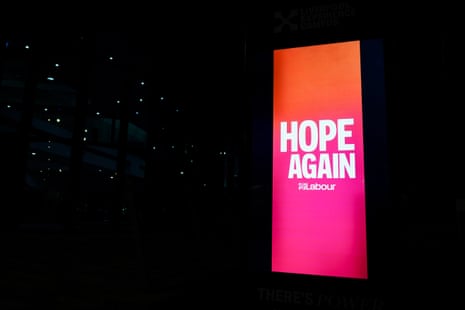
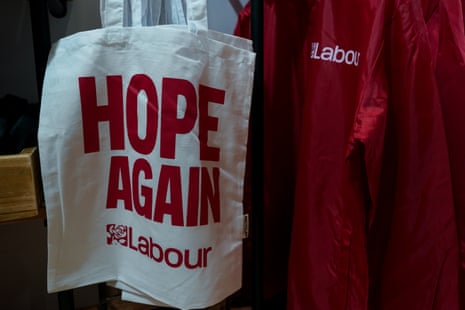
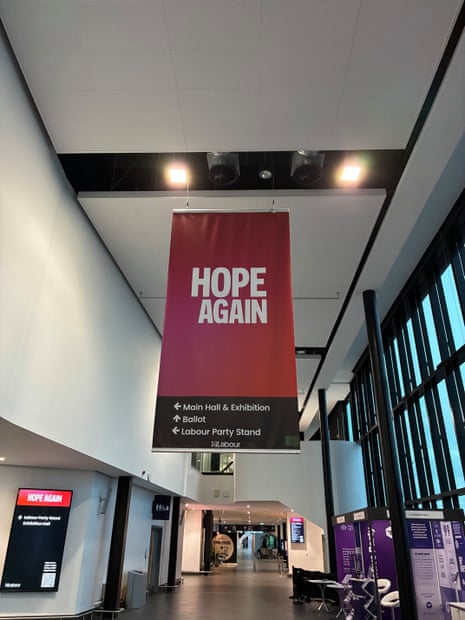
Good morning, and welcome to coverage of the Labour party conference. Or the Hope Again conference, as it is being billed here in Liverpool.
As a good Catholic, (probably) believes in the resurrection and, since he has become prime minister, his party has certainly staged a miraculous recovery. When it met in this city a year ago (at a conference which ended with Burnham's leadership ambitions becoming the subject of mild mockery from the Starmerites, and much of the media), Labour was about 10 points behind Reform UK and Nigel Farage seemed on course to become prime minister. That is not true any more. On Thursday two MRP polls showed that, with Burnham as Labour leader, Reform UK has suffered a huge setback. More in Common has another out this morning. "More in Common's latest MRP projects Labour on 250 seats and Reform on 147, a sharp reversal from July's projection of Reform 293 and Labour 110," it says.
But what next? That is what the next four days may (or may not) clarify.
Burnham has given an interview to the Guardian's political editor, , and he told her that he wants to show the public that he is willing to take "difficult but real decisions". said:
I think the public want to see, number one, honesty about things. So not spin or putting things a certain way that's self-serving. They want honesty, and then they want, I think, difficult but real decisions.
Not difficult decisions and making a fetish out of that, but actually grasping nettles and then moving things forward. I don't think politics has been prepared to do that enough in recent times.
Burnham said he would show that he was willing to take these decisions.
Always in politics, there are things that you can do. The question is sometimes: Are you prepared to do them? Yeah, I am prepared to do them.
What all those things are, sadly Burnham didn't tell Pippa. We will find out on Tuesday afternoon, when he delivers his conference speech. But he has an interview with the BBC's Laura Kuenssberg coming up soon, and we might learn a bit more from that.
Here is the agenda for the day.
8.30am: Angela Rayner, the housing secretary, is interviewed on Sky's Sunday Morning with Kate McCann.
9am: Andy Burnham is interviewed on the BBC's Sunday with Laura Kuenssberg.
11.20am: The Labour conference formally opens in Liverpool.
12.30pm: Lucy Powell, the Labour deputy leader and education secretary, addresses the conference. The other main speakers are Louise Haigh, the first secretary of state, at 2pm, and Pat McFadden, the work and pensions secretary, at 3.15pm.
3.15pm: Wes Streeting, the defence secretary, speaks at a New Statesman in conversation fringe event. Other fringe events include Kanishka Narayan, the AI minister, speaking on preparing workers for AI at 3.30pm; a LabourList rally where Ed Miliband, the foreign secretary, Streeting, and Angela Rayner are due to speak at 4.30pm; and an IPPR in conversation event with Louise Haigh at 4.30pm. You can read the full conference timetable here.
Also, at some point this afternoon Burnham is due to meet his Norwegian counterpart Jonas Gahr Støre.
I'm afraid we are no longer able to have comments open below the line every day on this blog. If you want to contact me, please email politics.live@theguardian.com. You can use this email to flag up corrections, comments for publication, questions or complaints.