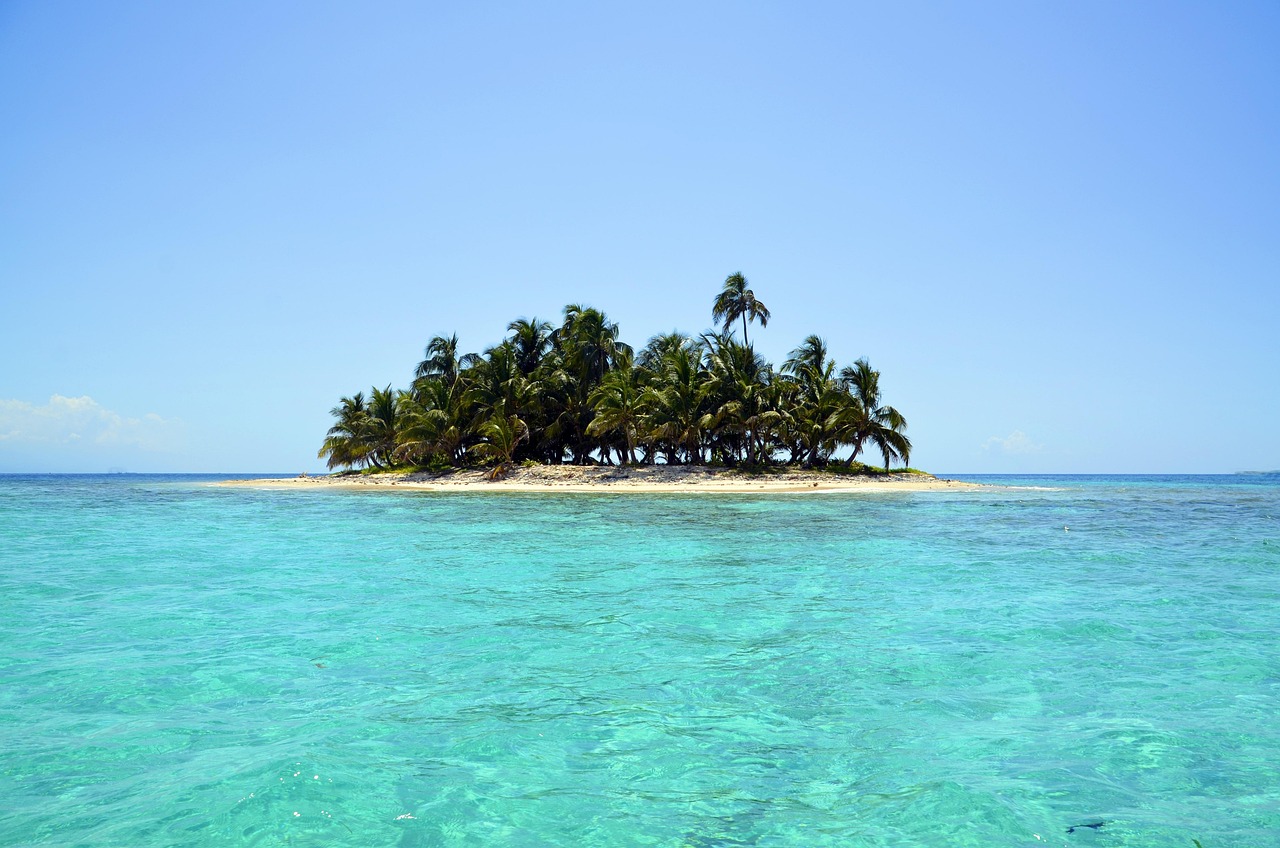
In the hazy distance, huge alien contraptions with mysterious symbols emblazoned upon them are terraforming a tropical planet. The machines arrived without announcement or explanation. One day, they were simply there. Now fear is spreading among the indigenous species.
It sounds like a pitch for a science fiction script: an alien species moves in and reshapes a planet to serve its own needs.
Let the plot thicken.
Assume the planet is not barren, like Mars or the Moon, but teeming with life. Now ET is an invader. Terraforming is no longer merely about making the environment less inhospitable to its own kind. It becomes a weapon against pre-existing life.
Welcome to Earth 2026 — to a region mislabelled the South China Sea — a name coined by 16th century European traders that predates, and has nothing to do with, who actually owns the water.
The terraforming invader is the Chinese Communist Party (CCP) — an anachronistic totalitarian entity that still clings to mainland China and somehow survived 1989 and the Tiananmen Square massacre.
Since 2013 (or 1995, depending on how one counts), the People's Republic of China (PRC) has been building islands where none previously existed in waters under the jurisdiction of other states.
Those other countries have rights that need no army to defend and no tribunal to grant them. International law draws them in a straight line 200 nautical miles from their own shore.
It is called an Exclusive Economic Zone (EEZ), and under the UN Convention on the Law of the Sea (UNCLOS), a treaty China itself ratified but has since repeatedly violated, the coastal state has sovereign rights over the natural resources of the waters, seabed, and subsoil within that zone, along with certain jurisdictional rights.
Full stop.
No dredger changes that maths. No fresh mountain of sand pumped up from a reef turns someone else's territory into a birthright.
Yet, that is precisely what has happened. Reefs once barely visible at high tide have been transformed into military runways, with the transformation itself invoked as justification, as if pouring concrete over a reef could somehow rewrite who has the right to it.
Killing a Sea
China's cutter-suction dredgers slice directly into living coral reef, pump the resulting sediment through floating pipelines, and dump it as landfill. It is a process that also throws up plumes of abrasive silt that drift onto neighbouring reefs and smother them.
The Asia Maritime Transparency Initiative of the CSIS (AMTI) puts China's direct toll from dredging and landfill at close to 4,648 acres (18.8 square kilometres) of buried reef.
But the dredgers were not the first to arrive.
Before the landfill came the clam boats. Chinese fishing crews harvest giant clams by dragging specially made brass propellers in a semicircle around the anchor chain at the bow, churning up the reef surface to free both live and dead shells. The technique leaves arc-shaped scars visible in satellite imagery, and only Chinese fishers are known to do this. The shell resembles ivory closely enough to have replaced it in Chinese statuary and jewellery; a single worked clam has sold for over US$100,000.
On top of the 4,648 acres of buried reef, AMTI also estimates another 16,353 acres (66 square kilometres) of reef has been damaged this way.
In 2016, the Annex VII Arbitral Tribunal constituted under UNCLOS — in the case brought by the Philippines against China, PCA Case No. 2013-19 — ruled against China's terraforming campaign in the South China Sea, making the extensive reef damage part of the verdict.
The dredging and harvesting were different phases of the same destruction. Satellite analysis of the 2014–2015 landfilling at Fiery Cross, Subi, and Mischief found that waves of clam boats had cut their arcs across the same reefs shortly before the dredgers arrived, stripping the coral of its most valuable extractable asset before it was paved over. The tribunal reached the same conclusion:
China, despite its own rules protecting giant clams and coral reefs, was fully aware of the practice and actively tolerated it as a means to exploit the living resources of the reefs in the months prior to those reefs succumbing to the permanent destruction brought about by the island-building activities.
Marine biologist John McManus of the University of Miami, whose research the tribunal cited directly, calls it “the most rapid permanent loss of coral reef in human history”, and pointed out that “once a portion of coral reef has been buried under tons of sand and gravel, it cannot ever recover”.
The tribunal found that China's construction caused “severe harm to the coral reef environment” — one of the most biodiverse marine environments on Earth, with over 500 coral species, and the nursery grounds on which fish larvae across the entire sea depend on to replenish it. The damage it held is irreparable.
China's wilful destruction of reefs and sea has since taken on a life of its own. Vietnam, apparently responding to the Chinese military buildup, has adopted the same practice and became the second-largest offender in terms of reef destruction.
The difference is that for Hanoi, it is seen as a defensive survival measure. Raymond Powell, director of Stanford's Project Myoushu, said, “Vietnam has drawn the conclusion that it has little choice but to respond”.
The End is Nigh
Analysts believe Beijing is close to making permanent its hold over 80-90 per cent of the South China Sea, a shared body of water bordered by several Southeast Asian states. Five Southeast Asian states have between a third and nine-tenths of their EEZs swallowed by China's nine-dash line:
The Philippine defence chief Gilberto Teodoro Jr., addressing China's terraformation in the South China Sea, said, “No ASEAN country accepts the legitimacy of that 10-dash line because that is the biggest fiction and lie that can be sold to any right-thinking person”.
ASEAN includes the countries of Brunei, Cambodia, Indonesia, Laos, Malaysia, Myanmar, Philippines, Singapore, Thailand, Vietnam, and Timor-Leste.