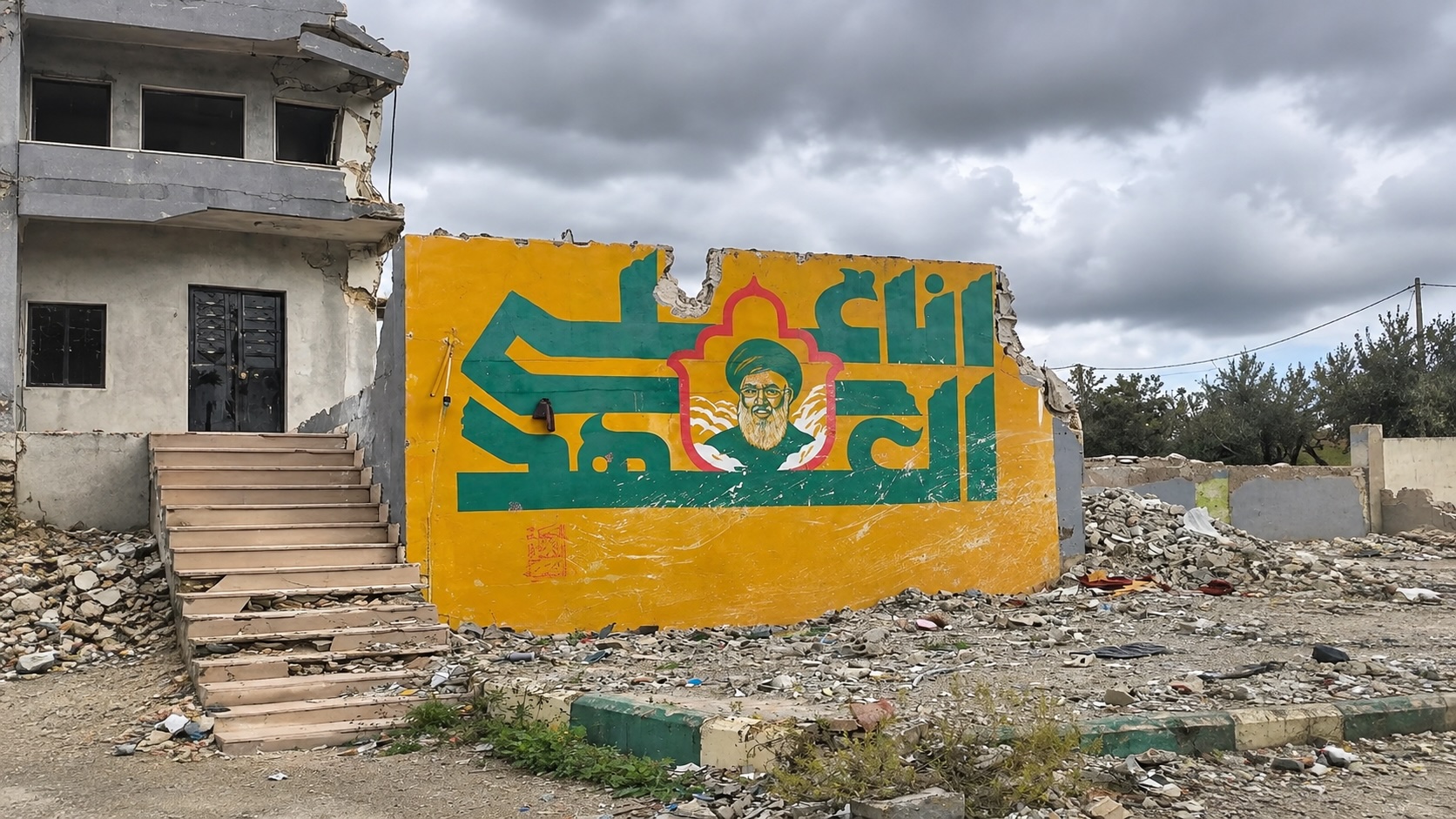
The stretch of high ground linking Jarjou’, Kfar Fila, and the upper folds of southern Lebanon's Iqlim al-Tuffah carries a quiet significance that may be easy to overlook. At first glance, it reads like any other limestone ridge in the south, with terraced slopes, pockets of scrub oak, and stone houses clinging to the mountain as it rises out of the Nabatieh basin. Yet these villages sit directly on the threshold between the low-lying interior and the resistance's mountain strongholds of Jabal Safi and Mleeta, standing right opposite the heights of Sujud and Mount Rihan. For generations, they have functioned as both a hinge and a shield for southern Lebanon's people.
During previous years of the occupation, when Israeli forces and the Southern Lebanese Army (SLA) held the elevated outposts along the Sujud and Jezzine ridges, the terrain itself was weaponised. High ground was meant to translate into total visibility and total control, leaving every road and valley below under constant surveillance and thereby constant threat. Jarjou’ and Kfar Fila lay directly beneath that gaze. Rather than collapsing and emptying under shelling, the villages quietly absorbed the pressure from above while keeping open the rugged paths that connected the interior towns to the mountain front.
What held this front together was arguably less a matter of military engineering than of social fabric. In Iqlim al-Tuffah, survival was never treated as something separate from ordinary routine. In speaking with the older generations I encounter, I learn more about how families continued pruning their olive trees, harvesting figs and thyme, and rebuilding stone walls within range of the outposts. They have turned their persistence into an unremarkable daily habit. There was no clean dividing line between the village and the resistance front.
The people who stayed to keep the houses lit and the land worked formed the living infrastructure without which no position on the ridges could have held. The summits above them were fortified for decades, yet the villages remained intact; they were tilled and inhabited. All this proves that high ground only holds value if the land below can be emptied. And that is why people here have started to return and rebuild, even if the Israeli strikes continue.
On the way to the southern Lebanese village of Majdal Selm, the chaos of Israeli aggression is being subdued by a veil of determination that has wrapped itself around the community like a cool compress. The people are quietly returning and attempting to rebuild, sometimes multiple times. They are doing this not solely for the sake of economic relief, but so they may leave an enduring trace of their existence despite the attacks and devastation.
“That area of the South”, a local man, Hussein, tells me, “that is what we call Khan Younis, just because of the sheer devastation; Israelis are blowing up everything that still stands”. Hussein works in a small van in the middle of the village alongside his son, serving coffee and small foodstuffs to those who make their way through. When I ask about Bani Hayyan, a southern Lebanese village that has been almost wiped clean off the map by Israeli airstrikes and demolition attacks, he sighs deeply and shakes his head. “It’s almost gone,” he says. Another man chimes in, “Everything that is gone will be rebuilt,” he says with determination. “The Israelis are comfortable with the current situation, but it won’t last for them, you will see,” he emphasises. We all nod and drink our coffee, listening to the sound of Israeli attacks in the distance and a drone that menacingly hovers nearby.