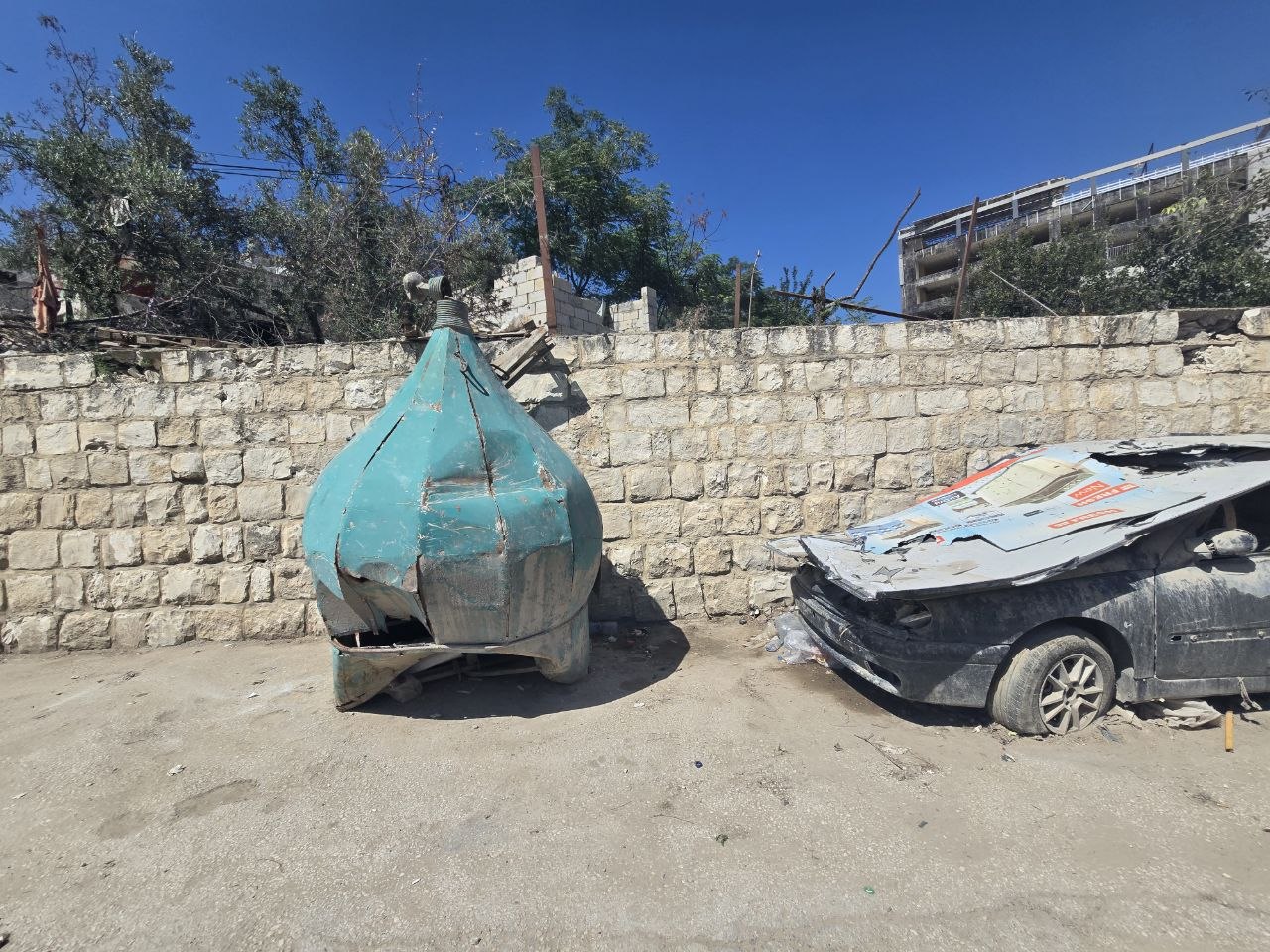
This methodology of targeting civil defence and medical transport carries a dark historical precedent rooted in the very same military playbook. Decades earlier, on 13 April 1996, during Operation Grapes of Wrath, an Israeli Apache helicopter fired missiles directly at a clearly marked ambulance in the southern village of Mansouri. Driven by Abbas Jiha, a local farmer and volunteer ambulance driver, the vehicle was evacuating wounded civilians when it was struck in cold blood, killing six people, including four children — an atrocity immortalised by the enduring image of Jiha clutching the lifeless body of his young daughter in his arms.
What emerges from this record is a consistent and brutal reality of Israel targeting first responders as a form of coercive pressure on Lebanese society at large. Hitting civilian areas, waiting for rescue teams to arrive, and launching secondary ‘double-tap’ strikes to kill survivors and emergency workers is a calculated measure designed to terrorise civil defence networks and induce a paralysing atmosphere of total vulnerability. If one cannot even rely on ambulances to come to their aid for fear that they, too, will be targeted — just as families fleeing Al-Mansouri discovered — then victims of ongoing Israeli attacks are entirely cut off from survival.
Across the wider US-backed Israeli war spanning into the 2023–2026 aggression, where dozens of health workers have been intentionally targeted and killed, countless ambulances destroyed, and vital medical facilities systematically bombed or burned down, including the deliberate torching of the Mays al-Jabal Governmental Hospital by occupation forces after converting it into a military barracks, this open policy aims to dismantle the infrastructure of life itself. Throughout surrounding valleys and woodlands, such as the Ali al-Taher ridge and the outskirts of Kfar Tebnit, the landscape is continuously reshaped by the concussive force of heavy artillery shells and white phosphorus illuminating the southern sky. Homes in villages like Bani Hayyan and Khiam are systematically blown up or burned to the ground, orchards and olive groves that have sustained families for multiple generations are incinerated, and the basic ecology of the region faces a scorched-earth policy aimed at making civilian life completely untenable.
The human cost of this Israeli violence reverberates directly through the shattered lives of those forced out of the south, scattering families across Lebanon away from the only homes they have ever known. Zahraa N., a university student forcibly displaced from her home in Nabatieh, tells UK Column that the ongoing Israeli aggression, largely ignored by the Lebanese state, has torn her family into pieces as they attempt to resettle over and over again:
We are in a state of limbo. Nothing changes until the Israelis are gone, and not just from south Lebanon, but from occupying the rest of the region. This is a project that impacts all of us, and until this is understood as a project designed to displace us all, to steal from us all, then we will face the same consequences. You either resist together, or fall apart together.
Addressing the collapse of state protections and the ongoing violations during recent appearances on Al-Manar television, senior Lebanese lawmaker and member of the Loyalty to the Resistance bloc, MP Hassan Fadlallah, stressed that the resistance maintains its operational readiness and will not compromise on national sovereignty. “Who said we do not want diplomacy?” Fadlallah asked during his televised address. “We want diplomacy, but we want it based on rights, national consensus, and strength”. Emphasising that field units remain actively fortified and prepared for confrontation, he declared that “the Resistance today is firm, it is regaining its strength, and actively preparing to confront the enemy”.
Rejecting political manoeuvres and pressures from domestic authorities or foreign intermediaries attempting to impose unequal terms under fire, Fadlallah made clear that the local population and the resistance refuse to accept any framework that normalises ongoing aggression or strips the south of its defences. He pointedly criticised the domestic political establishment for creating deep rifts with the public and failing to safeguard the country, maintaining that the steadfastness of the people on the front lines renders any submission impossible.
Yet, the history of the south is equally a history of stubborn resistance and community rebuilding. Across ruined alleyways of border cities and tent encampments of displaced families scattered from Beirut to the Beqaa, people engage in the arduous labour of holding their social fabric together. They form informal solidarity networks and cling to the conviction that local roots and the right to return are non-negotiable political principles. Ongoing assaults on Nabatieh al-Fawqa and neighbouring hamlets are designed to break this spirit of defiance and compel the population to surrender political agency for the hollow promise of security under the boot of imperial dominance.