Sally-Ann Hart is the former MP for Hastings and Rye and a former Rother district councillor.
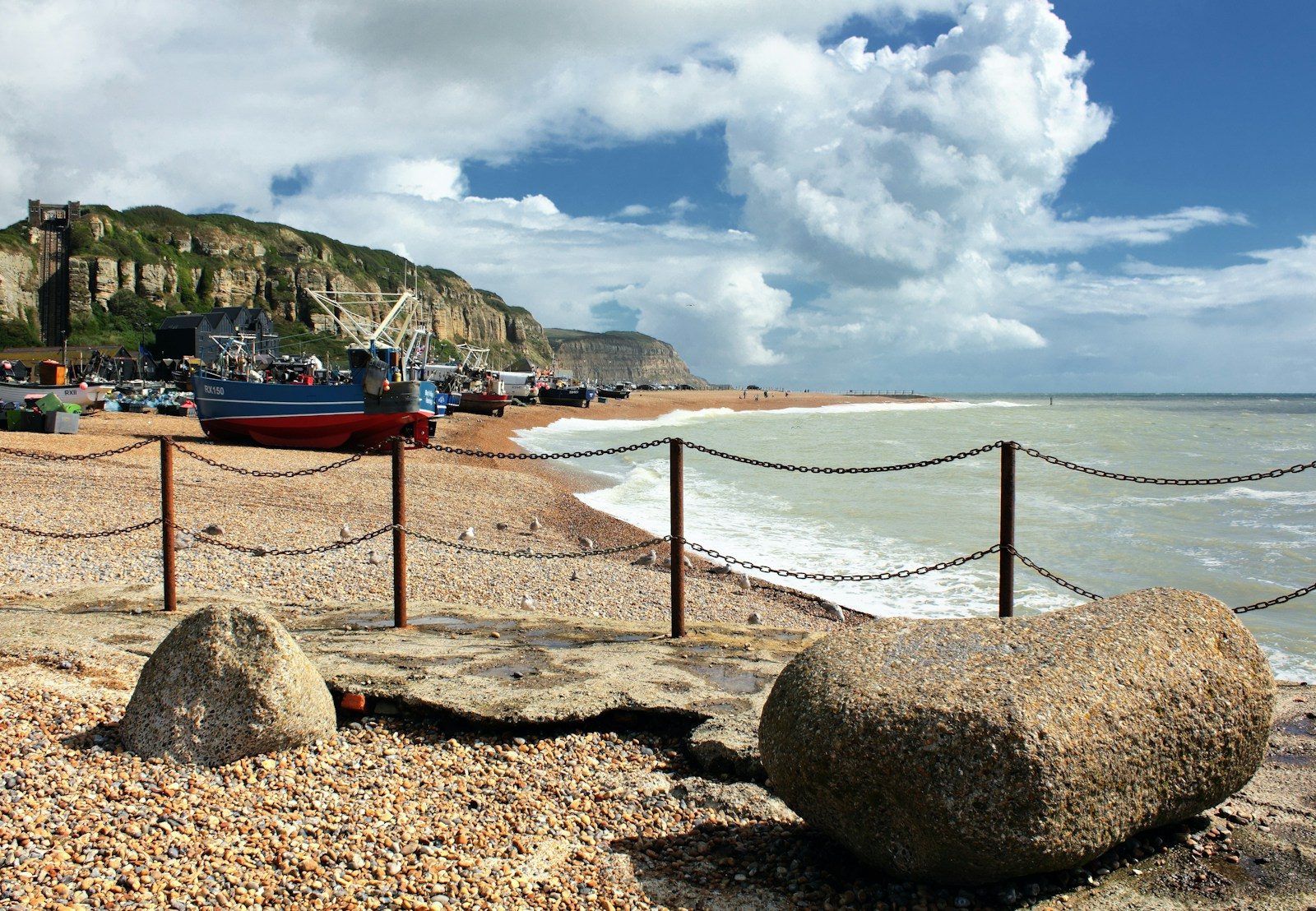
Fishermen in Hastings still launch their boats from the shingle beach, as their families have done for centuries, some before 1066.
It is the UK’s oldest beach-launched fishing fleet and those fishermen and their families, whom I was proud to serve as MP for Hastings and Rye from 2019 to 2024, are a living reminder of our rich heritage and of the importance of the ocean to our country’s past, present and future.
Chairing the All Party Parliamentary Groups for the Ocean and for Coastal Communities showed me how much of that future is still to be won. I saw the challenges facing our coastal communities, which Westminster too often overlooks, but I also saw the extraordinary opportunities waiting offshore. Now, as Director of Conservative Friends of the Ocean, I want my party to lead the way in making the most of them.
Our ocean is not a niche environmental interest. Although we give different names to its various parts – the North Sea, the Atlantic, Pacific and so on – it is one interconnected body of water that sustains life and connects us all. As an island nation our history, prosperity, security, national characteristics and identity have been shaped by the ocean. It is central to the UK’s future as an economic powerhouse, a climate solution and a source of national resilience.
We must think of the ocean as a strategic national asset with huge potential to support economic growth, create skilled employment, strengthen energy and food security, restore nature and help mitigate climate change. This should be an important part of Conservative economic and environmental thinking between now and the next general election – whenever that may be – and beyond. We should be looking to unleash the power of the ocean and be much more politically, socially and economically ambitious for our coastal communities.
The challenges facing our coastal towns are well documented, from poor connectivity, low wages, seasonal employment, poor housing, skills shortages to poor health outcomes. In 2021, Professor Chris Whitty’s report as Chief Medical Officer laid bare the health disparities in coastal communities. Five years on, Eastern Arc’s 2026 review makes clear that the health deficit remains entrenched and that political attention and coordinated national action have yet to meet the scale of the challenge.
Onward’s 2023 report “Troubled Waters: Tackling the crisis on England’s Coast” also makes uncomfortable reading.
Seaside neighbourhoods are 42 per cent more likely to be in the worst decile for income deprivation than inland neighbourhoods, with average coastal incomes £2,800 lower before housing costs, rising to £4,600 in the South East. Coastal economies are 10 per cent less productive than inland economies with the gap reaching 20 per cent in the South East. These are not just statistics. They represent families, businesses and communities that governments too often overlook.
Labour renewed its attention to coastal constituencies and their electoral importance in the run up to the 2024 general election but has consistently failed to tackle their deep rooted challenges or unlock their significant potential. In government, the Conservatives delivered significant investment in coastal regeneration, supported fishing communities and the seafood industry, modernised ports and harbours, and strengthened protection of our marine environment.
We must now build on that record, not simply criticise Labour. Conservatives have an opportunity to offer something more ambitious – a vision that recognises our ocean not just as an environmental asset but a source of enormous economic opportunity.
When I chaired the APPG for Coastal Communities, I steered its focus from challenges and deprivation to potential and opportunity. I banged on about the blue economy then and I am doing so again! The blue economy offers precisely the sort of opportunity Conservatives should champion – enterprise and innovation, investment and skilled jobs, alongside responsible stewardship of our natural resources.
Fishing and tourism are important, but there is so much more to the ocean economy. The development of our oil and gas reserves should go hand in hand with nature restoration. Offshore wind is already transforming parts of our coastline, creating demand for port infrastructure, engineering, manufacturing, maintenance and specialist skills. There are also significant opportunities in tidal and wave energy, green hydrogen, marine technology, shipping and maritime services and the development of new marine industries.
Aquaculture deserves much greater attention.
Responsibly managed shellfish and cultivating seaweed could diversify coastal economies, support food security, create new businesses and jobs, and provide employment throughout the year. Seaweed is amazing, with potential applications in food, materials (including seaweed ‘plastic’), pharmaceuticals and other emerging industries. We should be encouraging British innovation and investment into these sectors, supporting research partnerships between universities and businesses, developing relevant skills pathways and ensuring that coastal communities benefit from the opportunities created.
Our fishermen, who Sir Keir Starmer so badly let down when he was Prime Minister, must also remain central to any coastal and ocean policy. Sustainable fisheries, thriving fishing businesses and healthy fish stocks are co-dependent. Fishing is an incredibly dangerous occupation and it is vital that those who work at sea have a genuine stake in our marine environment and fishing industry.
The ocean is also one of our greatest natural assets in responding to climate change, absorbing vast quantities of heat and carbon dioxide, while marine ecosystems offer significant opportunities for nature recovery and coastal protection. Blue carbon habitats, including saltmarshes and seagrass meadows, store carbon, support biodiversity and help protect coastlines from flooding and erosion. In my 2023 World Ocean Day parliamentary debate, I highlighted their enormous economic and environmental value, with ONS figures putting the natural capital value of UK coastal saltmarsh and seagrass at billions of pounds.
This is not about choosing the environment over economic growth. It is about recognising that a healthy natural environment is an economic asset, creating opportunities for investment, research, jobs, fisheries and tourism while strengthening coastal resilience.
A practical Conservative approach means protecting what we inherit, adapting to the realities of a changing climate and investing in nature where it delivers public value. We should be guided by sound science, not ideology, and recognise that whilst climate change and nature recovery need attention, expensive, inflexible net zero policies should not come at the expense of economic growth, business competitiveness or ordinary households.
We cannot take the ocean and coastal communities for granted. Conservatives need a compelling long-term vision, a national ocean strategy connecting economic growth, marine conservation, energy and food security, maritime industries and coastal resilience. Ocean and coastal community policy needs a dedicated ministerial voice, not fragmented across departments.
We need to ensure the next generation inherits more than our maritime heritage and beautiful coastline. Our legacy to them must be thriving coastal communities, a productive, sustainable ocean economy and healthier seas.