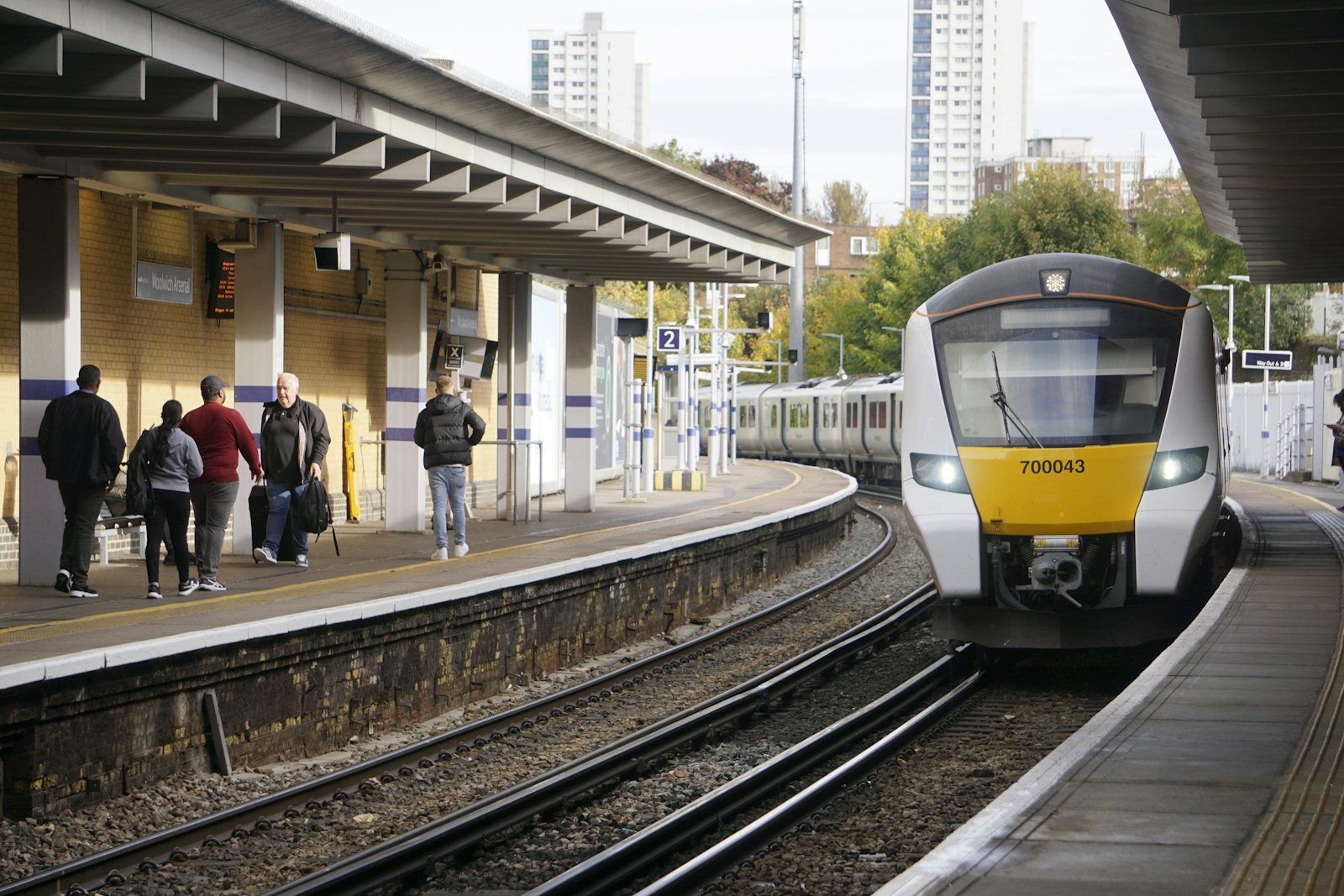
This week ConservativeHome published a piece by Ricky Blake arguing for more public investment in Railways.
Robert Marr is a senior business executive with experience leading UK and international businesses. He is a former Conservative parliamentary candidate and Association Chairman, and previously chaired the free-market Selsdon Group.
Thirty-four years ago, on 7 October 1992, as a Young Conservative I proposed a motion supporting the privatisation of British Rail at Party Conference, which was overwhelmingly passed. Legislation followed in 1993, Railtrack was established in 1994 and the first passenger franchises were awarded in 1995.
Today the process is in full reverse. South Western Railway returned to state ownership in May 2025, followed by c2c and Greater Anglia. Chiltern Railways followed in September 2026 — the tenth of fourteen passenger operators now taken into state ownership and control. Great Western Railway is due to follow in December, and Avanti West Coast in March 2027.
Labour politicians argue that passengers will benefit. Andy Burnham has called for an approach that “puts passengers before profit”, that “enough is enough” for passengers who had put up with a rail service “that has failed them time and time again”. Louise Haigh, now effectively Deputy Prime Minister, described the railway as “partially privatised, overly centralised, expensive, but unreliable, confusing and shamefully unaccountable”.
So are they right? Was my youthful conference motion a mistake? Did privatisation fail? Is nationalisation the answer?
My own experience is the opposite, of a considerable improvement under privatised operation. As a young commuter from Dartford in the days of British Rail, I remember trains that were never announced and seldom came, surly station staff and battered rolling stock. Today Dartford has modern trains, regular announcements, a modern station and many more destinations. Croydon, which I now regularly commute to, has frequent services from several operators operating impressive modern trains to a wide range of destinations from Gatwick and Brighton to Cambridge, Peterborough and more London terminals than in the days of British Rail. Jonathan Eley writing in the FT recalled that c2c, his Essex commuter line, was known under British Rail as the “misery line”. Privatisation brought new trains, dramatically improved punctuality and innovations including smartcards and flexible tickets.
But maybe my experience is unusual. Others may have different recollections – or may have never had the pleasure of travelling on British Rail. So what does the data say? Let’s look in particular at passenger use of the railways (surely a good guide to how well they served the travelling public), passenger satisfaction, and fares.
There were 770 million passenger journeys per year on average over the ten years to privatisation in 1994/95. After privatisation this steadily increased: by 2011/12 there were 1.46 billion, immediately before Covid 1.75 billion, and by 2025/26 there were 1.83 billion (1.57 billion excluding the Elizabeth line). Split ticketing is estimated to have inflated reported journeys but only by around 2 per cent, and factors such as rising prosperity and employment contributed. But it’s clear that rail privatisation saw a very strong sustained increase in passenger use over the period. In fact passenger journeys more than doubled during rail privatisation. [See the rail passenger journeys graph – if included].
Passenger satisfaction is broadly positive. The latest Rail Customer Experience Survey, a very large survey of rail users, recorded 87 per cent overall satisfaction and 85 per cent satisfaction with punctuality. Only 4 per cent were dissatisfied overall.
And fares? Historically during privatisation around 45 per cent were regulated, particularly commuter fares, and annual increases of regulated fares were generally limited to inflation or close to inflation, while unregulated fares such as first class increased by more. Across unregulated as well as regulated fares, fares rose in total by just 5.9% above inflation (as measured by RPI) between 1995 (privatisation) and 2026, equivalent to an increase of just 0.2% per annum over 31 years in real terms.
Rail privatisation therefore saw a dramatic and sustained increase in passenger use, generally good levels of passenger satisfaction, and virtually no increase in fares in real terms.
Was privatisation an unalloyed success? Not entirely. Under the model of privatisation adopted in the 1990s, passenger train services were separated from track infrastructure with the latter initially owned by Railtrack. But in 2002 Railtrack failed and Network Rail took over the infrastructure, solving the main immediate problem. Professor John Preston of Southampton University identified underlying problems with the privatisation model adopted, including the “vertical separation” of infrastructure and train-service planning, “overzealous bidding” for franchises (which came up every 7 to 10 years), and excessive costs from numerous “transactional interfaces”. Chiltern Railways was an interesting exception in this context, providing a generally well-regarded and appreciated service. Its 20-year franchise provided a much longer investment horizon, and it also operated Marylebone station, giving some integration between train and station.
But the relevant comparison isn’t between rail privatisation and some theoretical perfect railway, it’s with British Rail as it actually existed. Or with the new version of BR being set up by the Government now.
Would the Government’s proposed “Great British Railways”, bringing the railways under full state control, provide a better service? With government debt approaching £3 trillion, rail would again compete directly with public services such as health, defence and education, and would almost certainly be starved of investment. Add powerful rail unions and political interference and it’s hard to see the advantages of state ownership. Indeed, it seems likely that the improvements gained under privatisation will be lost.
There is another way.
The straightforward alternative to nationalisation would be to resume competitive tendering of passenger services, leaving the infrastructure with Network Rail. This, after all, is the structure that since 2002 underlay the substantial growth under privatisation, with rising train use and steady fares in real terms. It is the simplest way to avoid the problems that will inevitably come with state ownership.
However there is an opportunity to go further with privatisation, and do what the Major government hesitated to do: privatise vertically. Regional railway companies could be established that own and control the trains but also track and stations. This would deliver clear accountability, address the structural issues with the franchise model, and give railway owners a long-term horizon for investment. Commuter and other fares where competition is limited could continue to be broadly capped at inflation as they were during the period of privatised railways, with co-ordination of ticketing and timetabling where needed. Companies would therefore prosper by becoming more efficient, attracting more passengers or developing new revenues, rather than being able to increase fares in real terms. Open-access operators and freight operators could be encouraged wherever capacity permits, enabling new entrants and competition where possible.
We could recapture the spirit of the great Victorian railway companies. These regional businesses were responsible for their track, stations and trains, competing where possible and rightly proud of their services. The new regional railways could perhaps be public companies quoted on the London Stock Exchange. A government golden share could protect their continued stock-market listing and restrict takeovers and potentially cap borrowing, without interfering in day-to-day management. Commuters and railway staff could be offered discounted shares in their own railway, giving them a direct interest in its success.
Either way, whether by resuming franchises under the recent privatised model, or taking the opportunity to go further by creating new vertically integrated railway companies, it’s time to privatise the railways — again.