
If you speak to any business across the country, there is one issue that keeps coming up: the cost of energy. Under the last Conservative government, the cost of electricity for non-domestic consumers, businesses and industry, rose by 95 percent between 2020 and 2024. The cost of gas increased even higher. Although the cost has fallen under Labour, it is still too high.
At a time when our international competitors are pulling every lever to support their own industries, we need to do everything that we can to help reduce the price of energy to make British business competitive. This is why it was right the Prime Minister took action to introduce GB Grid to speed up business connection to the grid. But we need to do more in the short term.
The good news is that we have the lever to make this happen. The British Industrial Competitiveness Scheme (BICS), introduced earlier this year, will reduce electricity bills which will be cut by up to 25 percent for over 10,000 businesses. This is a welcome intervention, but it is too small scale.
READ MORE: Business Secretary Jonathan Reynolds addresses party conference – his speech in full
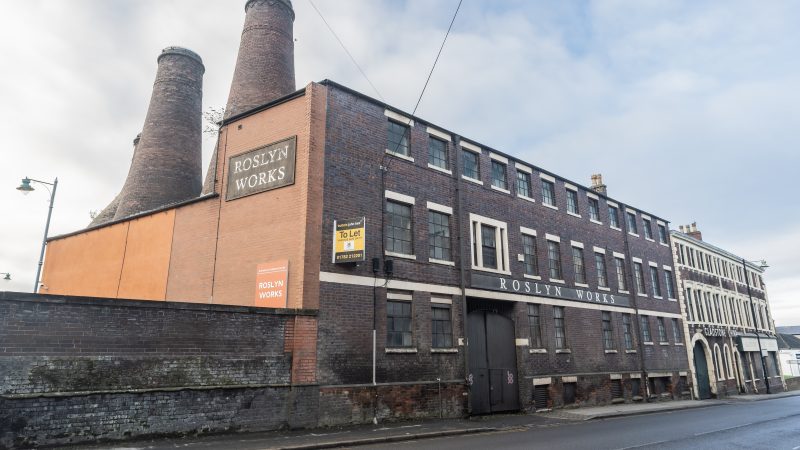
Industry is interconnected, and we cannot isolate a few firms at the expense of the others. Supply chains depend on an ecosystem of firms, some of which may not get access to the scheme and may have to cut production or, even worse, face closure. In my constituency, there are businesses that need cheaper energy to survive and invest, perhaps the most noted example being the traditional and advanced ceramics sectors.
The ceramics sector contributes more than £2 billion to the economy each year, employs around 20,000 people, and supports thousands of jobs through related supply chains in defence, aerospace engineering, nuclear energy and electronics.
Despite its strategic importance, the sector has struggled with volatile energy prices, and businesses consistently report energy costs as their largest immediate pressure. According to analysis by Nottingham Trent University, an average company spends 70 percent of turnover on energy costs.
The sector has called for targeted government support to ease the immediate burden of high energy bills and rising operating costs. While short-term relief is important to protect companies facing insolvency, there is also a clear strategic need to reduce the sector’s dependence on gas. The sector is one of the most gas-intensive industries in the UK, with gas accounting for around 85 percent of energy use, according to .
While the sector is making progress on electrification – with many companies investing in electric kilns and other low-carbon technologies – electricity prices remain substantially higher than gas. It will remain difficult for businesses to make the transition without urgent measures to make electricity costs competitive. Unfortunately, most ceramics businesses remain ineligible for BICS support. While a small number of advanced ceramics companies are eligible, most ceramics companies receive little or no direct relief on gas or electricity costs.
Become a friend of LabourList and join our community. Our friends support our vital non-factional work and get access to exclusive content and events.
If we are going to reindustrialise the economy as the Prime Minister has promised, we need to expand industrial output to create decent jobs across our communities. This means expanding production across manufacturing, critical minerals, agriculture and the physical economy. We need to be more ambitious than just survival.
The obvious solution is to expand the BICS to cover all manufacturing businesses in this country. that this would cost £3.3bn a year, an investment worth making and essential for our industrial future. The only question is how we pay for it?
a new project looking to reduce the cost of our electricity system by £10bn a year, has proposed changes to the Emissions Trading Scheme (ETS). It proposes to tackle the anomaly of this levy driving up the price of electricity bills for non-fossil fuel produced energy when gas is setting the marginal price through a ‘decarbonisation rebate’. If we had introduced these reforms last year, the government could have generated £2.3bn a year through this rebate. This rebate could be pooled and fund the expansion of the BICS scheme. By the end of the decade, the Unit estimates that this reform could save nearly £7bn – enough to provide at least two years of funding for an expanded BICS and get through the current price spike.
The ETS was designed to support decarbonisation and encourage greater investment in renewable energy, but by pushing up the price of electricity it is reducing demand and holding back investment. Reforming the scheme is a no-brainer.
More broadly, we need to be creative in getting the cost of our energy system down and channel those savings back into boosting the competitiveness of British business. We need to leave no stone unturned in the search for cheaper energy to turn reindustrialisation from rhetoric to reality.
Subscribe here to our daily newsletter roundup of Labour news, analysis and comment– and follow us on TikTok, Facebook. You can also write to our editor to share your thoughts on our stories and share your own. The best letters are published every Sunday.

Dr Allison Gardner is the MP for Stoke-on-Trent South.
View all articles by Allison Gardner MP