Kemi Badenoch took her opportunity to set out her programme in Birmingham and whilst it involved all the areas it had to, it majored on the economy. John Oxley returns to Labours pitch on the economy and where it comes from to highlight the opportunity for the Conservatives now back from Birmingham and looking at a looming Budget, to see how the two visions might compare and where working people fit.
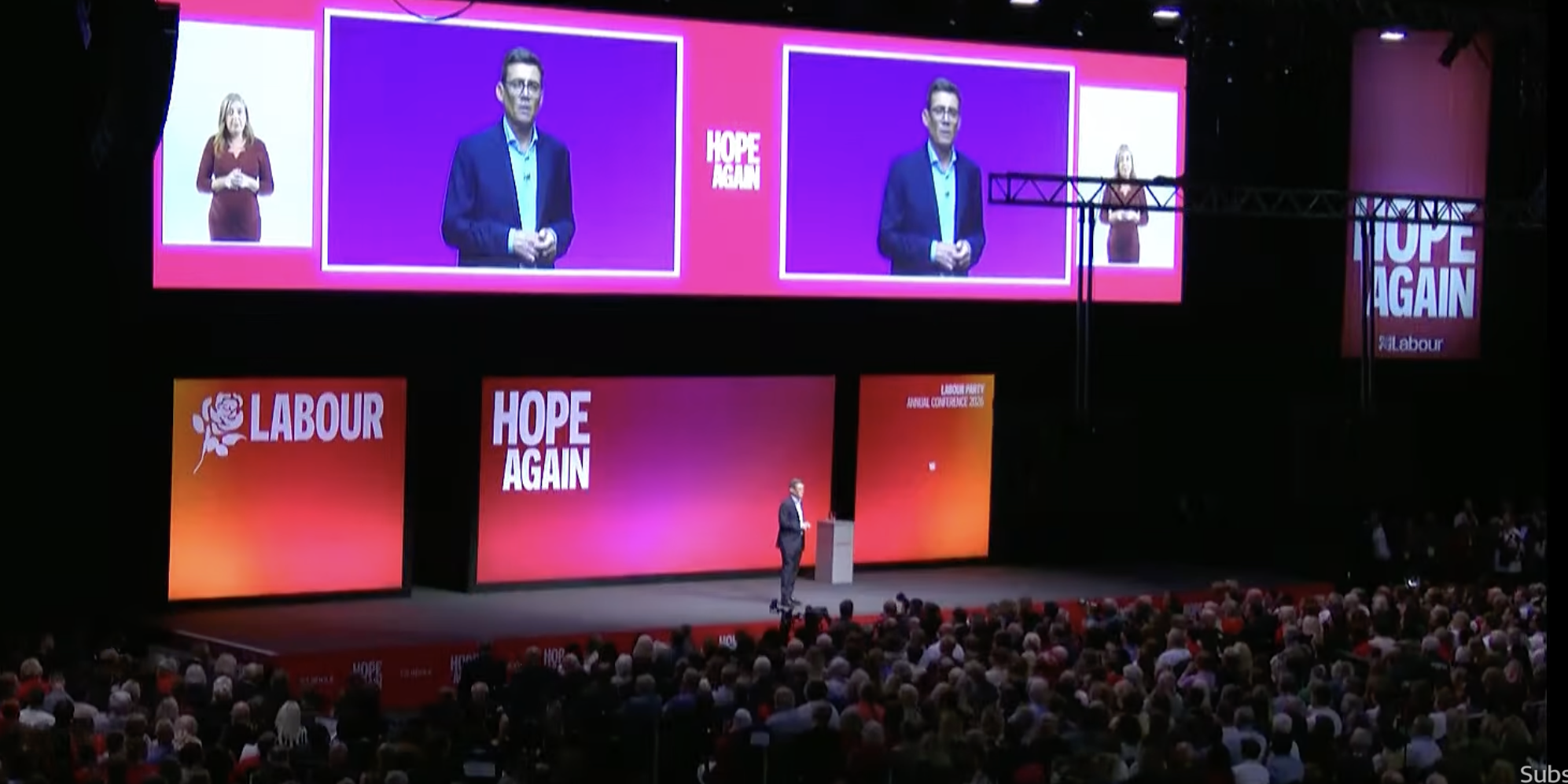
There was an air of nostalgia emanating from the Labour Party Conference. Andy Burnham used his keynote speech to attack the last forty years of politics, fostering a rosy-tinted view of the pre-Thatcher 1970s. Elsewhere at their conference, the reminiscing went back further. Merchandise stalls were bedecked with Harold Wilson memorabilia. At least two ministers invoked his 1963 phrase of the “white heat” of technology. For all the new PM took the chance to set out his plan for the future, the general atmosphere seemed firmly rooted in the past.
Arguably this has been true of Labour since they came to power in 2024. Starmer’s style owed more to the Old Labour Right than to Blairism- workerist and anti-business- but often punching leftwards on social policy and aesthetics. Under both leaders, the approach to the British economy has been somewhat nostalgia-driven, talking up re-industrialisation, vocational training, and manual labour as a return to prosperity. In Liverpool, the Chancellor promised a new age of industrialisation.
None of this is necessarily bad. Global circumstances mean that Britain has to take re-arming seriously. Doing so at home offers economic and security benefits, ensuring resilient supply chains and investing in our own economy. But Labour’s broader approach shows a kind of myopia. It ignores both the realities of the modern economy and the UK’s place in it. It elevates manufacturing for emotional reasons, harking back to a long-dead past, and fails to acknowledge where Britain really makes its money – services.
Across politics, it seems unfashionable to praise this work now. Anything that involves a keyboard, an office, or especially working from home has become derided. There is a sense that these industries are somehow less – less meaningful, less authentic, and less desirable for the country. In reality, they are essential to our modern economy.
Service industries are where Britain’s comparative advantage already lies. We have a highly educated workforce, speak the world’s most widely used language, and sit conveniently placed in the middle of the world’s time zones. We have already built world-leading reputations in these roles, from education to our legal and financial services. We have moved from a nation of shopkeepers to one of consultants, engineers and coders, selling slide-decks and expertise to the world.
The numbers are not even that close. Services account for around four-fifths of our economic output and nearly sixty per cent of our exports. This is not froth on top of the ‘real economy’; it is the real economy. Any government serious about growth should not sideline it, but encourage it, help it adapt to the age of AI, and consider how to broaden who benefits.
Even Labour’s reindustrialisation plans are likely to end up being far more about services than manual work. Modern, high-end manufacturing is not an employer on the scale of the industrial past. Part of the reason we make what we do here is that technology has taken most of the workers out of the equation. Machines and automation do much of the actual making. Humans will work on sales, consultancy, aftercare and accounting – this is where our workers add the greatest value. Rolls-Royce serves as a mature example of this, with more than half of its income coming from servicing engines it has already built.
Often the service sector gets treated as a South Eastern story, but really it is a national one. Even places like the North West and Yorkshire and the Humber make around half of their exports in services. Our service sector is not just City firms moving money between each other, but accountancies, engineering consultancies, software houses and law practices, employing people in towns that politicians usually visit to be photographed beside a production line. Any story of national economic renewal needs to recognise that.
Nostalgia can win you votes, but it cannot overcome political economy or technological change. UK-based industrial manufacturing as a mass employer will remain the exception, not the rule. We can probably use policy to encourage its growth, but we should not be embarrassed by our services sector either. Selling our intellectual capital should not be treated as less desirable than what we make with our hands. British films, British accountants, and more can be as revered worldwide and generate more money than a “Made in Britain” stamp might.
These businesses will keep making policy asks, and the government can do things to foster their success. High energy prices might matter less to an office block than to a blast furnace, but they still drive up costs. Rent and rates also matter, as do the availability of properly trained workers and access to the most promising markets. They need governments that listen but also aren’t afraid to champion them. If Labour is preoccupied with manufacturing and reindustrialisation, that presents an opportunity for the Conservatives.
We can reclaim our place as the party of business by championing business as the British economy is, not as we wish it to be. We can do this by listening to and representing firms, from the 12-person offices in local towns to the multinationals delivering services that genuinely add value to the economy. At times, we have also been drawn by nostalgia, sneering at the work-from-home knowledge worker and preferring the factory gate to the open-plan floor when we wanted a picture of economic seriousness. That tendency needs to go.
There is an irony to Burnham’s Labour clinging to the image of Wilson. His invocation of “white heat” was a pitch for a Britain remade by science, an argument against sticking to the industries of the past. Labour instead wants to make it into a souvenir. In doing so, they risk focusing too much on an economy they imagine, rather than the one which is earning our keep. We have arguably forged the new Britain he spoke of and should nurture it, rather than disdain it.
As we have seen at our own Conference, the Conservatives have seen there is an opening for a party that is at ease with the shape of the modern economy.
Of course, we want it to grow faster, increase productivity, and share its rewards beyond the South East. But we should also be proud of the economy we have and extol it when it is world-beating. The party that does so and speaks for the data analyst in Leeds as readily as the welder in Sheffield will have found the ground Labour has left behind. In doing so, we could speak for the jobs which most people do, and which contribute most to our economy.