
As the Member of Parliament for Blyth and Ashington, I represent communities that helped build both the Labour movement and modern Britain. While coal may no longer dominate our economy as it once did, the values forged in our mining communities of solidarity, resilience, and hard work remain pivotal to who we are.
Today, now that Britain’s industrial era seems to fade ever further into memory, it’s easy to imagine Britain’s industrial communities and rural life as belonging to entirely different worlds. Our modern politics has a tendency to present the countryside as something culturally apart from the labour tradition, pigeonholed as belonging predominantly to the major urban manufacturing centres like Manchester, Sheffield, Glasgow or London. Yet anyone who grew up in the Northumberland coalfields can tell you that towns and villages like ours hold an important part in the rich history of working-class life.
Of course, the working-class countryside is home to more than our industrial history alone. As someone born and bred in Ashington, the community is rightly proud to be the birthplace of one of the most significant figures of post-war Britain – Jack Charlton. The World Cup winner, Leeds United legend, and the manager who revolutionised Irish football never forgot his roots. But before that, before success and stardom came his way, Jack began life as the son of an Ashington miner, and his working-class roots never abated. Jack fiercely supported Harold Wilson’s Labour, drafting a pamphlet for the Party’s 1970 election campaign. A decade and a half later during the miners’ strike Jack Charlton would quietly and without seeking any kudos lend his Range Rover to flying pickets from the National Union of Mineworkers during their campaign to save the coal mining industry across Britain. His loyalty to the labour movement and to his community was constant, and this honesty and commitment should be held up as a model for all of us in the Labour movement.
READ MORE: ‘Football doesn’t care about the Oxbridge tech corridor’
At the same time, millions across Britain also knew Jack as one of the country’s best-loved champions of countryside life. In the late 1980s, Jack Charlton’s Game attracted immense audiences as Jack travelled the country to introduce modern, urban viewers to fishing, rabbiting, rough shooting, wildfowling and to a way of life conditioned to the cycles and seasons of rural Britain. It was a programme about wildlife and conservation, about local traditions, about the turning of the year, and about ordinary people taking some pleasure in the ground beneath them.
Become a friend of LabourList and join our community. Our friends support our vital non-factional work and get access to exclusive content and events.
Britain’s working-class culture came both from the cities and from the towns and villages nestled between farmland, woodland, rivers and moors. Our communities worked hard, but they also understood the value of time outdoors. Football was usually the great passion, but far from the only one. Pit villages supported brass bands, pigeon racing clubs, whippet racing, allotments, and fishing clubs. Many families rabbited, ferreted, rough shot or went wildfowling, either as a hobby or to supplement the family table.
Looking back, Jack Charlton’s Game now feels like a window into a Britain that has largely disappeared from public life. We have started to forget that Britain’s industrial communities and rural traditions belong together in the history of our class and our movement. If Labour forgets that many of its traditional heartlands were communities with deep connections to the countryside, we risk presenting rural Britain as someone else’s world.
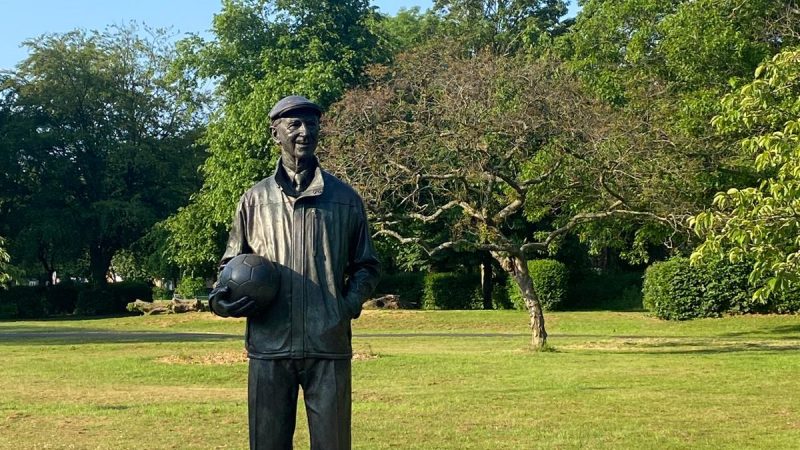
It is absolutely right that the people of Ashington honoured Jack with a permanent statue in Hirst Park following a campaign led by my son Liam who was then a Labour Councillor. Before the countryside became another front in Britain’s culture wars, it was just a fact of life for communities like mine. As Labour thinks about rebuilding relationships across every part of Britain, it would do well to meditate on the life (and politics) of men like Jack Charlton.
The sooner we remember that our rural traditions hold just as much significance in the life of our movement as those of major towns and cities, the better we’ll be for it. Rebuilding that relationship will not be done through gestures or through language borrowed from somebody else’s argument. It will be done by treating rural Britain as a place with wages, housing costs, bus routes and public services, and by remembering that the people who live there have always been our people too.
Subscribe here to our daily newsletter roundup of Labour news, analysis and comment– and follow us on TikTok, Facebook. You can also write to our editor to share your thoughts on our stories and share your own. The best letters are published every Sunday.

Ian Lavery is the MP for Blyth and Ashington, and Chair of the Trade Union Group of Labour MPs.
View all articles by Ian Lavery MP