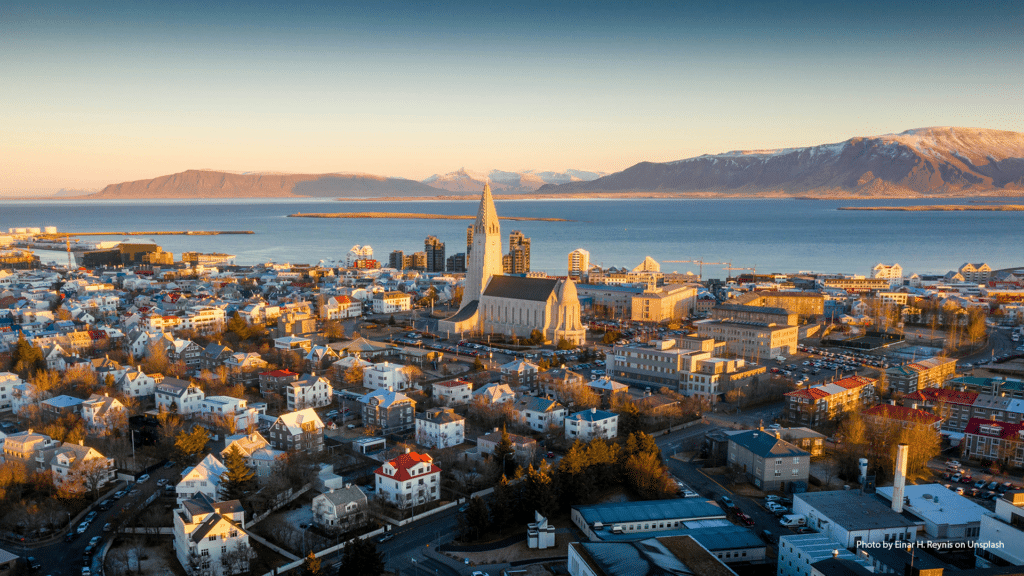
Margrét Einarsdóttir unpacks the result of the recent referendum in Iceland that saw the public narrowly vote against reopening accession talks with the European Union.
Iceland first decided to apply for EU membership in 2009, following the 2008 financial crisis which hit the country particularly hard. Negotiations were suspended in 2013 following the election of a new right-wing government, but the application was never formally withdrawn, leaving Iceland an applicant country since 2010.
A referendum on whether to reopen accession negotiations was held on 29 August this year. The result reflected a deeply divided country: 47.2% voted in favour, while 52.8% voted against. The divide was also geographical. In the capital area, around 56% voted yes, while the no vote was particularly strong in rural areas (60%-63%).
The result was a significant shift from the picture painted by a June opinion poll, where 52% of those who had made up their minds said they intended to vote yes. The most striking change appears to have taken place among the youngest voters, aged 18–29. In June, 63% said they intended to vote yes; by the final Gallup poll in August, that figure had fallen to around 40%.
The ‘No’ campaign appears to have played an important role in this shift. It ran a vigorous campaign aimed particularly at younger voters, making extensive use of social media advertising. This may well have been what ultimately tipped the balance.
I suspect that the average Icelandic ‘No’ voter was less than enthusiastic about the messages of congratulations that followed the referendum from, among others, the MAGA movement, Nigel Farage and Marine Le Pen.
After all, Icelanders were not voting against close and continuing cooperation with the European Union. Iceland is already part of the European Economic Area (EEA), which gives us access to the EU single market. It is considered our most important international agreement and there is widespread satisfaction with it. Iceland is also part of the Schengen area.
So what explains the no vote?
My sense is that, for most of those who voted no, the EEA Agreement is simply enough. It provides Iceland with much of what it needs from its relationship with the European Union, while remaining outside the EU’s Common Agricultural Policy and Common Fisheries Policy. These are two particularly sensitive areas for Iceland. For most Icelanders, therefore, the choice was not between Europe and isolation. It was about whether the existing arrangement – close economic integration with the EU while remaining outside the Union itself – is preferable to full membership.
The deteriorating international situation prompted the government to hold the referendum somewhat earlier than originally planned. Trump’s ambitions regarding Greenland were poorly received in Iceland, while the prospect of a trade war is particularly troubling for a small, open economy that depends heavily on free international trade. Icelanders are also increasingly concerned about Russia’s aggression towards European countries and the continuing war in Ukraine.
Against this backdrop, it is striking how little security and defence featured in the debate ahead of the referendum. Supporters of a ‘Yes’ vote argued that closer cooperation with the EU on security and defence could provide an additional pillar of security. Yet this argument gained little traction.
Iceland has never been occupied by a hostile power and, although recent international developments have undoubtedly caused unease, there appears to be a widespread belief that the present geopolitical situation is temporary rather than a lasting change in the international order. Many Icelanders continue to assume that the current political situation in the United States will eventually pass and that Iceland’s bilateral defence agreement with the US, alongside its NATO membership, provides the security the country needs.
The strongest opponents of reopening the accession negotiations also played down the security dimension. Instead, the debate came to focus on claims that EU membership could ultimately result in young Icelanders being conscripted into a future ‘European army’. Despite repeated interventions by experts pointing out that the EU has no common army, the claim proved surprisingly resilient during the referendum campaign.
The referendum could easily have gone either way. The government could have done more to prepare the ground for a vote on such a complex matter, which might in turn have produced a more informed and substantive public debate.
The ‘No’ campaign was more direct and effective and seems to have been better resourced. Many of Iceland’s fishing quota holders, some of whom command considerable financial resources, are staunch opponents of EU membership.
By this point, supporters of a ‘Yes’ vote were increasingly talking about misinformation and ‘fake news’, with some asking whether Iceland was experiencing its own version of Brexit. It is important, however, not to overstate this comparison. The most strident claims came from a relatively small group and were by no means representative of the majority of those who ultimately voted No. As noted above, many – probably most – No voters remain strong supporters of the EEA Agreement and favour close and constructive relations with the EU.
The intensity of the campaign was palpable. Most strikingly, Iceland’s Foreign Minister, Þorgerður Katrín Gunnarsdóttir, received death threats and required extensive security protection – something highly unusual in Icelandic politics. I cannot recall another political issue creating such a deep division within Icelandic society, and I fear that the divisions exposed by the campaign may take considerable time to heal.
The government immediately made clear that it would respect the result and that there would be no resumption of EU accession negotiations during the current parliamentary term. The application for membership itself, however, has not been withdrawn, meaning that Iceland formally retains its status as a candidate country.
At the same time, discussion of the possibility of Canada developing a closer relationship with the EU has prompted some debate in Iceland about whether the country might pursue deeper cooperation with the Union in areas such as security and defence. Whether the EU would have an appetite for such an arrangement with a small, unarmed island state in the middle of the North Atlantic – one that has just politely declined the opportunity to resume negotiations on joining the Union – remains to be seen.
By Dr. Margrét Einarsdóttir, Professor at Reykjavik University and Chair of the Board of RU Institute of International and European Law.