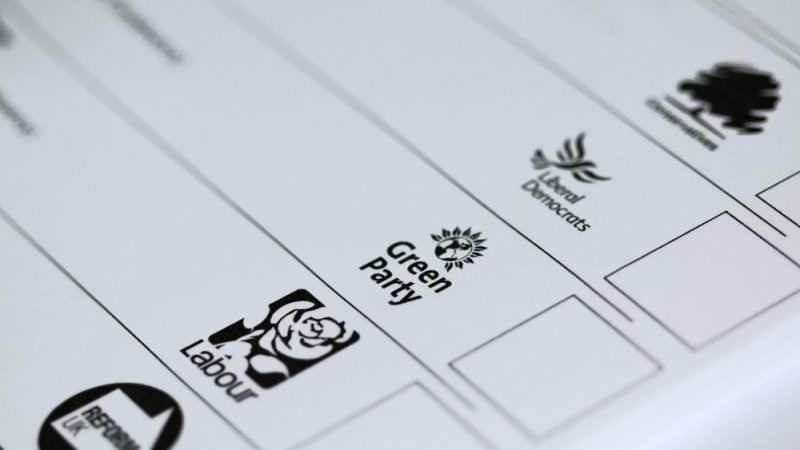

Labour voters considering voting for populist parties can be wooed back to the party with one simple thing: proof that the change promised at the general election is being delivered.
Two focus groups commissioned by LabourList and the Good Growth Foundation brought together people who backed Labour in 2024 but are now considering switching to Reform UK or the Greens.
Across both groups, participants described themselves as being “in two minds”, “considering” their options, or waiting to “see what happens”. None had firmly transferred their allegiance to another party.
When asked whether Labour could win them back, both groups said yes – with the bar set both low and difficult to meet: seeing actual change.
“Just deliver on what they’ve promised in a reasonable timeline,” one Green-curious voter said. “Just to show the country is improving…It’s not a very high bar.”
Another, considering backing Reform, was more blunt: “I want to see a politician actually do something, rather than waffle on about something and then not properly do it.”
While the findings show that Labour risks losing voters on both sides of the political spectrum, neither group has necessarily left the party behind completely.
Participants in both focus groups felt that little had improved in their lives since Labour returned to power in 2024, with not one person able to identify something that had got better for them over the last two years.
Voters explained in detail how they had been forced to cut back on a range of things due to the cost of living.
One Reform-curious voter described how the cost of a school bus rose from £380 a year to £900, while another said their treatment for a chronic condition had been pushed from every nine months to every 15 months.
Among Green-curious participants, one person said they had stopped paying into their pension because they needed the money now, while another explained they were unable to invest in themselves through spending on training or new qualifications.
Both groups reveal how voters across the country are cutting back not only on discretionary spending, but on aspects of life that affect longer-term security.
One participant said: “People are working harder, and working more jobs. If you’re working in certain jobs, a certain amount of hours, you should be able to have a certain quality of life, but that just doesn’t seem available.”
READ MORE: Labour Party Conference 2026: Full LabourList events programme, revealed
Decline of the high street
One issue that united both groups of voters with an almost identical response was on the state of their local high street.
Participants, regardless of where they were from in the country, described the same scene of a high street in decline.
One voter, a retired volunteer in rural Gloucestershire, said: “We used to have everything… Now we have two vape shops, two tattoo parlours, a couple of Turkish barbers, and I don’t know how many nail salons. Apart from Lidl, there is not a shop.”
However, the two groups interpreted the decline of the high street in different ways. While Reform-curious voters read it as an economic story, with shopping moving online, Green-curious voters saw the decline as evidence of community being hollowed out.
For both, the state of their high street represented a symptom of a greater national malaise: absent investment and social isolation.
‘People find themselves searching for a party with clearer priorities’
For Labour voters tempted by Reform, the attraction broadly comes from a sense that the party would disrupt a system that is not currently working for them, rather than specific policies they support.
However, one participant did give a substantive reason for their consideration – immigration, framed through pressure on housing and public services.
The same was true of Green-leaning voters, who said that it had become less clear what Labour stands for, while the Greens were seen as easier to understand.
One participant, a mother from west London, said: “At one point, Labour was very clear about their policies, who they were fighting for and what they were fighting for. That’s become less and less clear over the years. People find themselves searching for a party with clearer priorities.”
Become a friend of LabourList and join our community. Our friends support our vital non-factional work and get access to exclusive content and events.
Environment and fear of Reform turn voters away from Reform and Greens
However, participants from both groups are held back from fully backing a new party by two different factors.
For the Reform group, many participants were turned off by the party because of their environmental policies. One participant in particular explained that Farage’s position on net zero was potentially disqualifying for them and said: “I think that is quite a big issue, so I guess that’s something that would make me not want to vote for them.”
For those considering the Greens, the fear of Reform is the biggest brake – with concern at the prospect of a win for the party being strong enough to back Labour tactically.
A project manager in Bristol tempted by the Green Party said: “If it was a choice of Reform not winning, or the Green Party winning, I would go for Reform not winning any day – because that’s going to be much more catastrophic to the country.”
Push factors not guaranteed to hold
It is important to note that the factor pushing voters away from alternatives to Labour is fear of the alternative, rather than a reason to support Labour. The focus groups exposed that this brake is not guaranteed to hold, with dissenting voices in both groups.
One Reform-curious voter said that the need to address the cost of living and the economy overrode the need for climate policies.
“It doesn’t affect me, I don’t really care. If they have a four-year, eight-year term, it’s a much longer goal. It’s further in the future. We need economic work now, we need development now, we need everything now.”
On the other side of the spectrum, the Reform surge was seen by a Green-curious voter as an argument for voting sincerely, rather than tactically.
“We’ve got to a point where people are starting to vote for what they actually believe in. I think I’ll probably start to go with what I believe in more now, rather than go for a vote that I think will win.”
Subscribe here to our daily newsletter roundup of Labour news, analysis and comment– and follow us on TikTok, Facebook. You can also write to our editor to share your thoughts on our stories and share your own. The best letters are published every Sunday.
Burnham seen as a ‘doer’, but with some scepticism
One factor that has attracted some voters to reconsider Labour is the change of party leader.
Both groups saw Andy Burnham more positively than his predecessor, with the participants describing him as a “doer” and someone who reacts quickly.
However, with his premiership still in its infancy, many were unable to name any achievements he had accomplished since entering Downing Street.
One Reform-curious voter was explicit: “I don’t think he’s done enough yet, to be honest, to prove to me that he’s a good leader.”
When participants were asked about a number of policies announced by Burnham, the £2 bus fare cap was the most well-received, with many expressing the direct and immediate benefits of the policy. However, their praise was caveated as a “good first step”.
“It’s certainly not life-changing, but it’s nice to see actually something positive implemented that directly affects me,” one voter said.
On housing, both Reform and Green-curious voters supported the idea of building more council housing, but were sceptical that the policy would actually be delivered.
Coming as Housing Secretary Angela Rayner admits Labour’s target of building 1.5 million new homes over the course of the parliament looks out of reach, the participants felt they had heard the announcement before, but had never seen the promise delivered.
‘Just do that, and we’ll keep you in’
What could bring these voters back comfortably into the Labour fold once again? Delivery, delivery, delivery.
The participants did not demand particular policies or a reversal on a certain position, but rather a simple instruction: prove to us that the government can make something better.
One Green-curious voter named a model for Labour to emulate: “You can see stuff is actually happening, stuff is getting done quickly, day by day. Just do that, and we’ll keep you in.”
That, of course, is easier said than done – particularly on some of the bigger reforms Burnham has outlined, such as public ownership of utilities and social care. However, if Labour can make a real difference on key domestic issues, such as the cost of living and the NHS, the party may have a pathway back to power at the next general election.
LabourList and the Good Growth Foundation will be discussing these ideas today from 12pm to 1pm at a conference fringe event titled ‘The Big Challenge: How Can Labour Win Back Populist-Curious Voters?’ at the Good Growth Foundation Pod in the Dee Room, Lower ACC Hall.