The Local Government Association is a well-funded lobby group with offices in Smith Square, near Parliament. It is funded both by central Government grants and membership subscriptions from local authorities. Those two funding sources prompt it to have a combined role. Partly it is what the Institute of Economic Affairs has termed a “sock puppet” – organisations funded by the Government which campaign for more Government funding. But it also has a trade union role reflecting its local authority membership. No matter how egregious a Council’s performance might be, it can always rely on the LGA to be wheeled out to make excuses for it.
The LGA promotes some broader themes too. It has an Equalities hub. (With all the predictable stuff about encouraging schools to be “transgender inclusive.”) Naturally, it has declared a “climate change emergency” and has lots of “resources” to help councils take “urgent action” to embrace net zero. The LGA has 509 staff, including 42 communications officers and two international officers. (It spends £42,533.45 a year renting a Brussels office.)
The LGA’s defenders would argue it also has a more positive role. That it champions innovation, best practice and efficiency and thus, with all this useful advice, offers good value for money. The difficulty with this defence is that it turns out to be untrue. I have asked all English local authorities, via a Freedom of Information request, for details of any efficiency savings in the past year due to LGA advice. None of them could think of a single one. “None,” was the overwhelming, brutal response. A few were diplomatic – “none had been recorded” or “none were directly attributable”, etc. But no Council could positively identify a single item.
For many years I have regretted that Conservative councils (with the honourable exception of Bromley) have gone along with all this, continuing to pay their LGA subs. Do they agree with all mushy, woke groupthink?
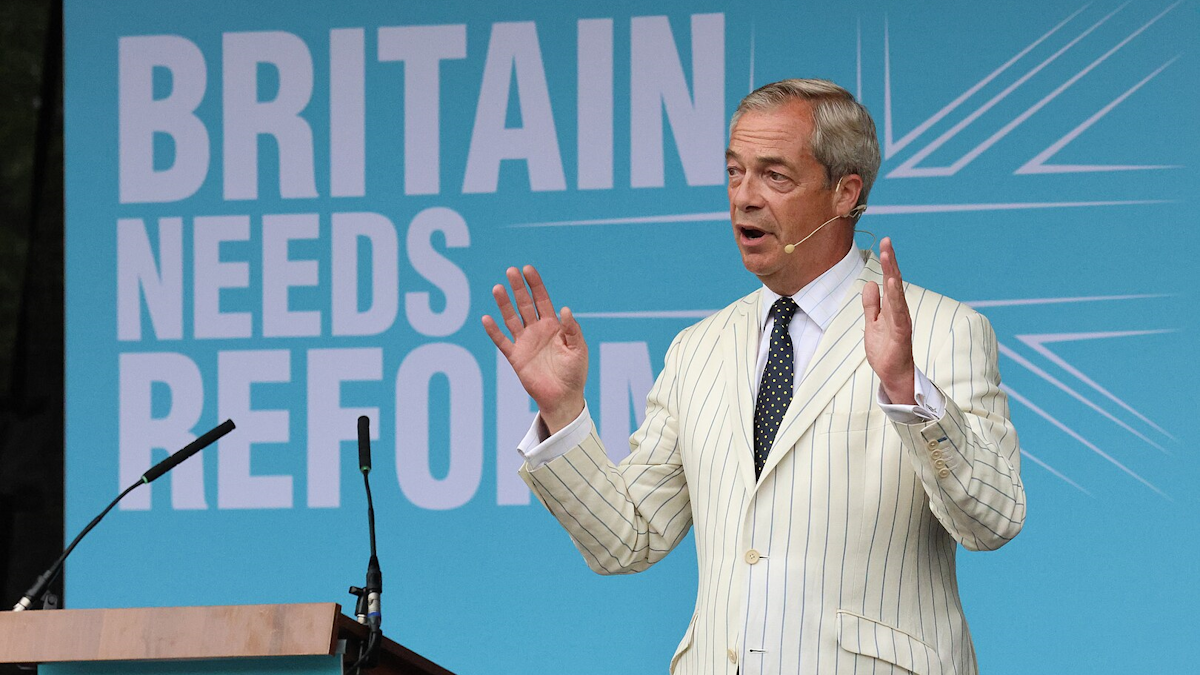
Recently, of course, we have seen the emergence of Reform UK councils. Here was a perfect opportunity for the insurgents to prove their worth. To disrupt the cosy two-party cartel that is epitomised by the LGA. Yet (with the honourable exception of Newcastle-under-Lyme Borough Council) they continue to hand over great wads of Council Taxpayers’ cash to the apparatchiks of Smith Square.
How do we solve this mystery? “Follow the money,” as dear old Deep Throat used to advise. The LGA might be a rotten deal for Council Taxpayers, but some councillors do rather well out of it.
For a start, lots of councillors are paid allowances to sit on the LGA Board and an array of its committees. These posts are shared out between the parties. Cllr Stephen Atkinson, the Reform UK Leader of Lancashire County Council, is paid an annual Responsibility Allowance of £42,312 by the LGA to be “Vice Chair” of its Board. This is on top of his councillor allowances – £14,301 as a basic allowance, plus £42,903 as a Special Responsibility Allowance. So he’s on over £99,000 a year.
Cllr Mick Barton, the Reform UK Leader of Nottinghamshire County Council, is paid £20,370 by the LGA to chair its Fire Services Committee. That’s on top of the £56,614 he gets from his county council. He also gets £6,385.95 from Mansfield District Council, plus another £319.59 for being the Reform UK Group Leader there. So that’s £83,690 a year. Well behind Cllr Atkinson. But all is not lost. The East Midlands Combined County Authority is due to start paying out soon, so that might put Cllr Barton in the lead.
They had the chance to compare notes at the LGA Conference in Bournemouth in July, in between attending woke re-education sessions. (Cost to his Council Taxpayers for sending Cllr Barton was £549.00 delegate fee plus hotel costs of £348.37; the LGA picked up the tab for Cllr Atkinson.)
Plenty of other Reform UK councillors are doing well out of the system. There are nine policy committees, each with 18 councillors as members. “Chairs” are paid £20,370 a year, “Deputy Chairs” £10,184; ordinary members £3,395.
Linden Kemkaran, Mark Arnull, Sean Matthews, and Andrew Husband are Reform UK leaders of, respectively, Kent, West Northamptonshire, Lincolnshire, and Durham. Each is “Deputy Chair” of an LGA committee and thus picking up £10,184 a year. Ker-ching. Don’t expect any of those councils to be leaving the LGA any time soon.
But that’s not all. There is also the “Corporate Peer Challenge programme.” £2.12 million a year is spent on this. There are 462 councillors who undertake it and the rate for Member Peers working on a peer review is £371 per day. Of course, they don’t have to bother writing the report. An LGA staffer does that – reflecting any “input” any councillor has happened to make.
I wonder how they all justify it to themselves. I suppose a bit like the MPs expenses scandal they note it is within the rules and that everyone else does it.
Perhaps some of them even convince themselves they are making a worthwhile contribution. Imagine all those cross-party meetings and reports making bland, worthy remarks. Lowest common denominator recommendations that are sufficiently meaningless to achieve consensus. Not too outspoken, of course. Don’t want to risk getting kicked off, after all.
There are some who would argue that councillors (or at any rate council leaders) are hard working and hold powerful positions and should be paid more. If any of these council leaders had delivered a Council Tax cut then one might not mind them getting paid all that money. But they haven’t, of course. I suspect that we would generally be better served if councillors were paid nothing and retired businessmen, with plenty of money and a no-nonsense outlook on life were encouraged to come forward as council leaders. People with good motives.
Plenty of councillors are bone idle. Some councils keep a log of how much casework is done and it is amazing how many councillors do virtually nothing. But if we do want to pay councillors more than it should be done openly by their councils. Not a hidden cash-back arrangement via the LGA.
I should stress that there are 17,000 councillors in England and that the vast majority have never got a penny from the LGA. I am also sure that most Reform UK councillors, as with most Conservative ones, put themselves forward for the right reasons. Patriotism, civic pride, a wish to cut bureaucracy and wasteful spending and achieve better run services with a lower Council Tax. A desire to make the villages, towns and cities they live in more beautiful. Many would not even have known councillors were paid when they first applied to be candidates.
Yet we can see that all too often the decent councillors have been outmanoeuvred by the grifters. Reform UK came in promising to derail the gravy train. Instead they have hopped aboard and are enjoying the ride.
In some ways the decision of whether or not to cancel an LGA subscription is a minor matter given total council spending. But it reflects a mindset which helps us to understand the narrative of wider municipal profligacy.
Perhaps it also offers a clue to what a Reform UK Government would be like. Many are inspired by, and others alarmed at, its anti establishment tone. But would it really change much? Would it, for example, abolish Quangos – or decide to appoint its own cronies to sit on their boards? Would it be true to its small state principles? If its local authorities are any guide, then those principles would be sold out lock stock and barrel.