The UK and EU have agreed a reset deal, Downing Street has said, although the level of tuition fees EU students will pay to study at UK universities remains unresolved.
"The deal is done – negotiations have concluded," a No 10 statement said, less than an hour after the prime minister, Andy Burnham, arrived at the summit venue in Brussels, where he was greeted by Ursula von der Leyen, the European Commission president, and António Costa, the European Council president.
The reset means there is agreement on three deals – food and drink, emissions trading, and a youth mobility scheme – but EU sources say these deals will not enter into force unless the UK reaches a settlement with the bloc over tuition fee rates for European students.
The statement came shortly after headlines on Friday suggested that the tuition fee issue could cause other parts of the process to collapse.
However, after the deal was announced, UK officials pushed back strongly against the idea that the three plans could be jeopardised by a failure to agree on tuition feels, saying the issues were completely separate. Earlier, EU officials had indicated that progress on the main deals would be contingent on tuition fees.
While talks on tuition fees are scheduled to last another six months, the officials said that new arrangements for food and agriculture would come into force in March 2028 regardless of an agreement on the issue.
They said the UK had also won sign-up to the potential idea of inclusion in the EU's yet-to-be finalised "Made in Europe" policy, a protectionist plan intended to limit China's increasing influence on European industry. One official called this "a big win", especially as it was achieved before a deal on tuition fees.
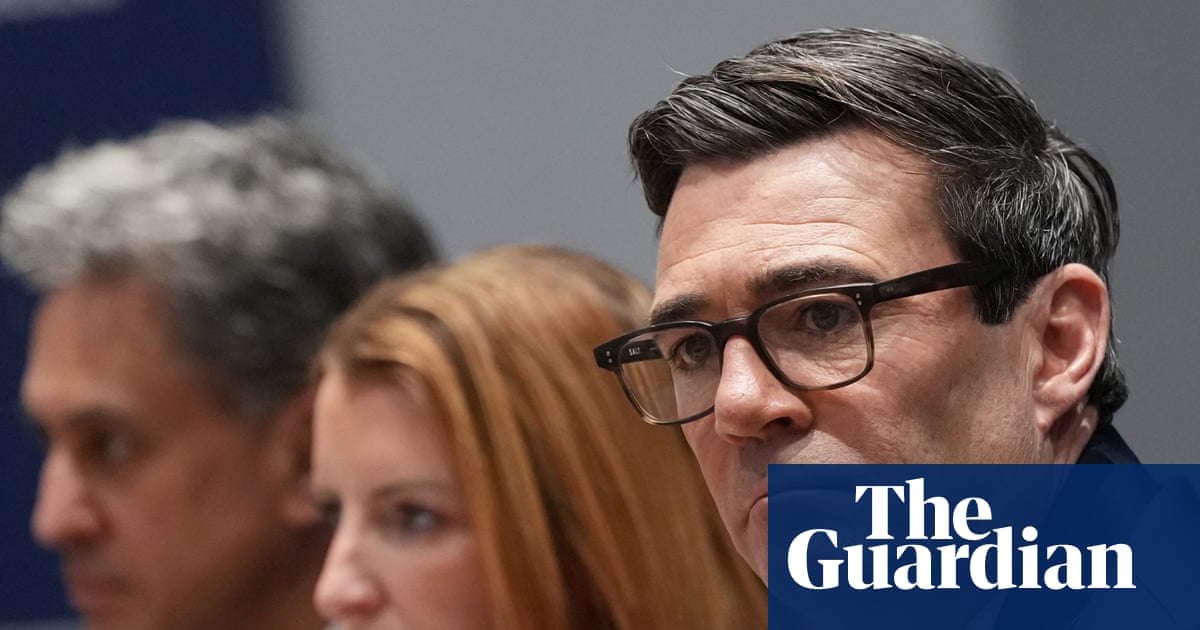
The arrival on Friday morning of Burnham, von der Leyen and Costa was met with a brief burst of the UK and EU anthems from a string quintet. None of the leaders made a statement.
In a sign of how seriously the summit is being taken by London, the prime minister was accompanied by a phalanx of cabinet ministers that included: Louise Haigh, the first secretary of state; John Healey, the chancellor; Ed Miliband, the foreign secretary; Jonathan Reynolds, the business secretary; Angela Eagle, the environment secretary; and Anneliese Midgley, the chief whip.
Speaking earlier to business leaders, Burnham said: "It just makes sense to get closer." He described the summit as "a big day and hopefully a positive day", and said his aim was to "put the country on a better path, more hopeful about the future, more sense of possibility and positivity around the country," as he wanted to break with "a decade of low, stagnant growth … [and] rising costs".
Brussels insiders said on Friday that equal treatment for EU students at British universities would be essential for the success of the deal as a whole.
A statement seen by the Guardian from the main EU institutions spelt out the link: "The Council and Commission consider that this agreement is to provide for equal treatment with nationals as regards tuition fees for all students. The Council and Commission acknowledge that these four agreements form a package of the 2026 EU-UK summit."
An EU official said: "I think our position has been clear. We think this is an issue that needs to be addressed."
The EU wants to ensure its students pay UK domestic rates for tuition fees, which are capped at £9,790 for the current academic, rather than the international rate that can be four or five times higher. In a concession last night, the bloc agreed to defer agreement on tuition fees by six months, but will continue to press for domestic rates.
In 11th-hour talks over tuition fees, the UK suggested it could go as low as £12,000 for EU students, according to two EU sources, which is more than £2,000 in excess of the charge for UK students. The EU continues to seek "equal treatment" for its students, suggesting that tough negotiations lie ahead.
Earlier, the two sides agreed that 100,000 young people from each side could take part in the youth mobility scheme that allows the freedom to live, work, travel and study on both sides of the Channel for up to three years.
Even with the deal not yet finalised, Burnham has begun to face a strong pushback from anti-Brexit politicians in Britain, notably Nigel Farage, the leader of Reform UK, who is also in Brussels and will host a press conference later on Friday.
Speaking to LBC radio, Farage said Burnham was "rejoining a chunk of the European Union's single market", which would result in the UK becoming a rule taker. "It is wholly unnecessary, and he's being led by the nose by the European bureaucrats," Farage said.