David Willetts is a member of the House of Lords.
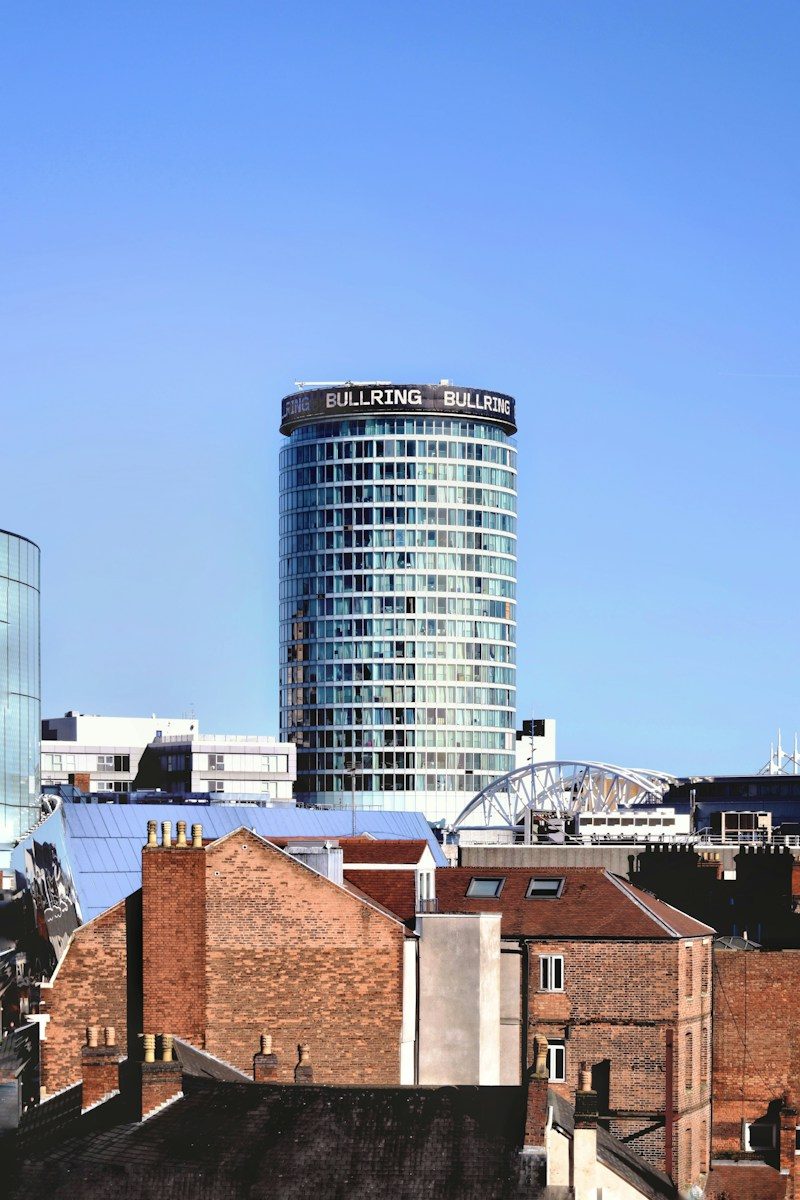
Conservatives heading to Birmingham at the end of the week invite a comparison with Andy Burnham’s focus on the North. Manchesterism may have entered the political vocabulary but there is little chance of Birminghamism matching it.
One reason is the deep problems facing Birmingham council. It had the humiliation of going bankrupt three years ago: emerging from that has cost at least £750m of exceptional financial support paid for by asset sales and council tax increases.
Britain’s twin second cities of Birmingham and Manchester are now almost exactly the same size economically: Birmingham’s economic output is estimated at about £38.9b and Manchester’s about £38.1b. But Manchester achieves that with fewer people and has been growing faster. One reason is that more graduates stay on in Manchester than in Birmingham and more can get to the centre of the city to work in the service sector which is driving Manchester’s growth.
The political attention going to Manchester far out-weighs Birmingham. That goes back before the days of Andy Burnham. George Osborne’s nearby Tatton constituency gave him a particular interest and connections. He worked closely with the leadership of Manchester Council and, as Chancellor, promoted their schemes for city growth. I was brought up in Birmingham and asked him why Birmingham got far less: he explained that Manchester Council regularly pitched good proposals which Birmingham did not match.
London based politicians and journalists see the cities very differently. Manchester is far enough away to be seen as authentically Northern. But Birmingham somehow doesn’t get the same cachet. It seems like the fly-over state. The Midlands feels as though it loses out.
There are deep historical reasons why the Conservatives should pay more attention to Birmingham. It has strong claims to be the birth-place of modern conservatism. Manchester shaped the free trade agenda through much of the nineteenth century. It had a concentration of powerful mill owners with large factories.
They were liberal free-traders. They were the Gradgrinds in Charles Dickens’ – probably based on Preston. A merchant in Germany sent his son over to help manage the family cotton business in Manchester – Friedrich Engels whose report on the Condition of the Working Class in England helped to shape Marxism.
Birmingham was different. Instead of those large Manchester factories with such an economic and social gap between owner and employees, Birmingham had more small businesses organised around the many trades of Birmingham artisans. Their average size was much smaller than in Manchester and there was more co-operation between employers, who might be artisans themselves, and their workforce.
There were hundreds and later thousands of small factories. The most successful and prosperous businessmen lived in Edgbaston, close to the centre of the city. With this less sharp divide between employer and employee, Asa Briggs speculated that if only Engels had been sent by his father to Birmingham not Manchester then the history of the world might have been different!
Birmingham was the environment in which Joseph Chamberlain developed his civic gospel of practical measures to improve the conditions of its citizens. He was a Liberal mayor but his council was only able to knock down the slums and construct its Corporation Street, still at the heart of the city, because of planning powers granted by Disraeli’s Conservative Government.
Disraeli had long been a critic of the liberal free-trading ‘millocracy’, but his response had been a romantic picture of the communities of the middle ages. That was not an agenda for Government. But that was what Joseph Chamberlain certainly had and Disraeli helped make it happen.
Chamberlain was proud of his domestic agenda, telling Birmingham’s voters that he was “prouder of having been engaged with you in warring against ignorance and disease and crime in Birmingham .. than if I had …instigated the invasion of Afghanistan.”
Chamberlain split with Gladstone in 1886 over home rule for Ireland: he created a new Liberal Unionist Party. Enoch Powell was brought up in Birmingham and fascinated by Chamberlain. In his biography of Chamberlan he says it “was more than a watershed in one man’s career. It was a great geological rift in the pattern of British politics.”
It then gradually led to the merger of Chamberlain’s Liberal Unionists with the Conservatives and in 1912 the Conservative and Unionist Party was born. It would not have happened without Chamberlain. It changed the character of British Conservatism.
On the Continent, the Centre Right often remined divided into two distinct parties. One was a rural communitarian traditionalist country party. That is the Conservatism of the countryside to which the party retreated during the mid nineteenth century. The other party was an anti-clerical, pro-business liberal party of social reform. It was an urban party. That was what Chamberlain brought in 1912. Uniting these two traditions has been key to Conservative success and will continue to be so.
This draws on “Conservatives in Birmingham” by David Willetts published by the Centre for Policy Studies in September 2008 to mark the first Conservative conference in Birmingham for 75 years