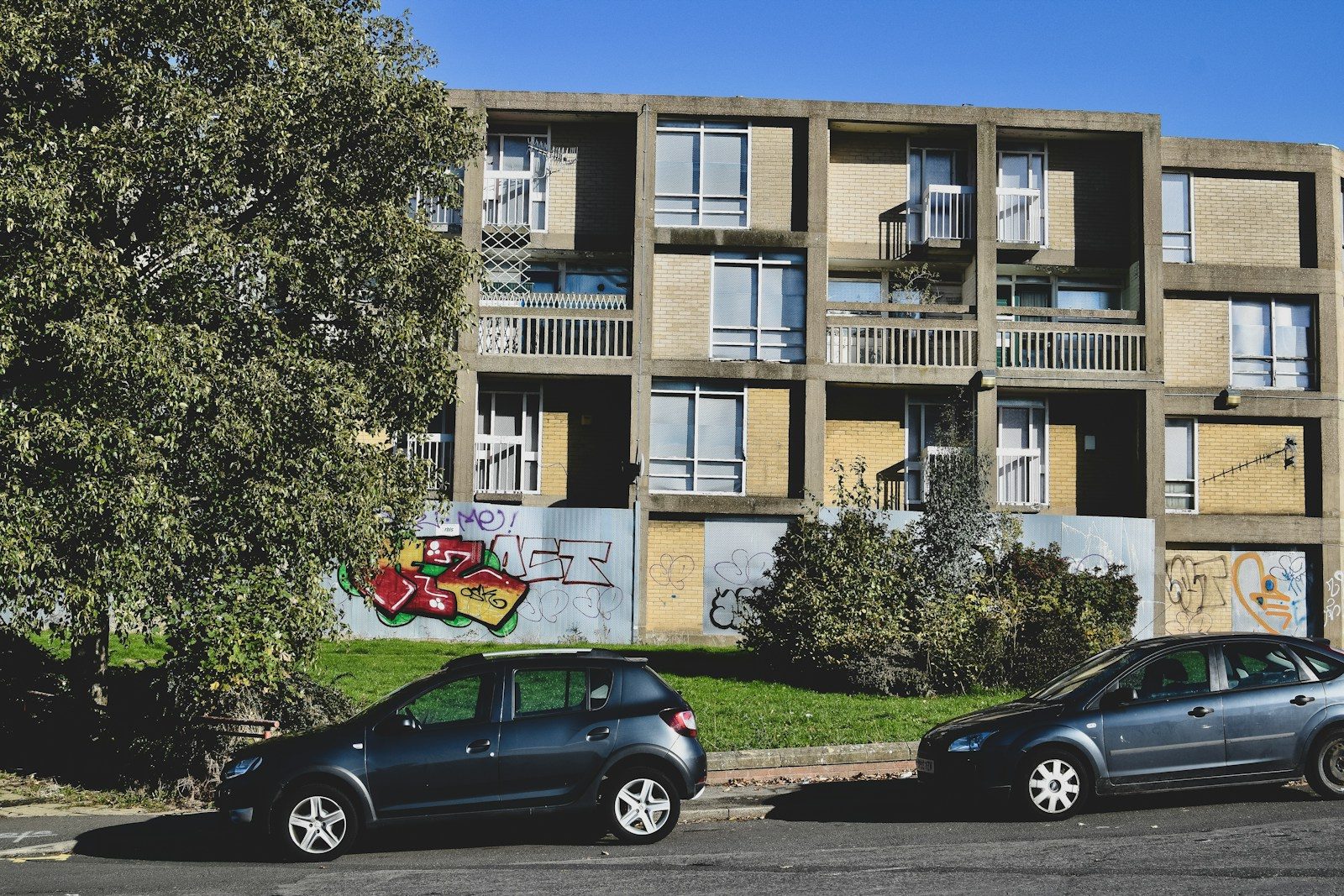
When the Boundary Estate, London’s first council housing estate, opened in 1900, few could have imagined that, 125 years later, nearly one in five people would live in social housing – around four million households in England alone.
Over the past century, we have quietly redefined the role of the state in housing. Like much of our welfare state, what began as a safety net has increasingly become a system of long-term provision.
Since taking on my new role at RBKC, I have sought to step back and look at housing policy from first principles. The question I keep returning to is simple: what problem are we trying to solve?
The Victorian answer would have been straightforward: to replace the abject poverty of London’s slums with decent homes. Today, I think most people would answer differently: to prevent homelessness.
I agree, but I also want to bring fairness to the system. In my first few months of this role, I have seen an inherent unfairness in how limited housing is rationed out and competed over.
Fundamentally, we Conservatives want people in their own homes. And RBKC has not sat idly by. We’ve approved more new homes in the last four years than in the 20 that led up to them.
We’ve also supported more densification – recently liberalising the ability to build extra floors on existing homes. Even in conservation areas.
But new supply is not enough, at least not yet; we must also tackle the inherent unfairness of allocating what we currently have.
In my role, I see now that government provides subsidised housing in all manner of ways, and not just by owning homes directly. It does so through b&b hotels, temporary accommodation leased from landlords, mostly out of borough, and private tenancies funded through benefits. It’s clear, however, that none of these are optimal approaches.
Whilst these approaches solve our statutory duty, they provide no agency to the tenants.
And it’s not cheap.
We’re the smallest London borough and it costs RBKC alone over £60 million in rent payments. £45 million of which comes from Central Government. This is £60 million of taxpayer money that could be better spent, if it needs to be spent at all, on national priorities, or indeed, reducing debt.
Take the example of one of our council flats. We collect £169.12 per week for a 2-bed that’s actually worth £600. The tenant gains a lifetime tenancy at this heavily subsidised rate, and rather unsurprisingly has no incentive to ever move out.
Thus, a flat is locked up, potentially long after the need has passed. And all that happens is this cost is passed onto someone else. Here, it is the neighbour next door. They go to work, pay taxes, travel costs and the £600 a week rent only to come home to the same block with less money in their pocket.
As a recent Times article has shown the subsidy gap between a private tenant and a social tenant here in RBKC is 78 per cent.
We Conservatives believe in markets. This one clearly isn’t working.
Unfair on the social tenant as they never dare move, unfair on the tenant in TA as they wait in the wings for them to do so, and especially unfair on the person renting privately next door and funding it all whilst competing not just with other renters but with councils for accommodation.
I don’t believe this is sustainable. It is unfair to everyone, especially the taxpayer.
Instead, the answer is agency not subsidy.
So, this means trying something new. In RBKC we are ending the idea that social tenancies are the goal to aspire to, reserving them solely for those with truly complex need. Children in special education or adults with disabilities. Not only protected – but given more priority. The welfare state back to doing what it was meant to.
Everyone else will be given a settled choice in the private sector; a home they can afford, in a place they want to live. As their incomes rise, the level of support falls, until in time they are free of the state.
The left will call this social cleansing. But no current social tenancy is affected by any of this.
Let’s look instead at what the current system actually does. Our temporary accommodation is already 80 per cent out of borough. Households put in a room we choose, waiting years for a social tenancy that may never come.
The choice we are offering is not between Kensington and somewhere else. It is between a home someone chooses for themselves now, or one we chose for them.
It’s time to be honest with people. Something councils have shied away from. For most on our housing register a social tenancy in RBKC isn’t a realistic proposition. I say this now, to save them 12-15 years on a waiting list in a home they may not want in hope of one they do.
Our new policies are now out for consultation – resting on a simple belief that a home of your own today is better than a place in a queue.