A new levy on developers to allow almost 16,000 homes to be built in the environmentally protected Norfolk Broads has been cut by tens of thousands of pounds per house, the Guardian can reveal.
Ministers say the government's environmental delivery plans (EDPs) were created to unblock housing growth across the country and are a "win-win" for development and nature.
They allow environmental damage to protected habitats and species to be overlooked as long as developers pay into a nature restoration fund, which is used for conservation actions at a later date designed to address the impacts. Once the first instalment of the fee is paid, work can start immediately.
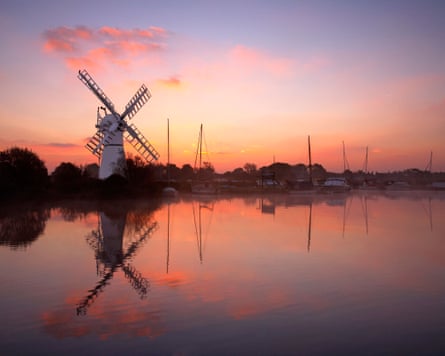
Labelled by critics as "cash to trash", the first EDP was published last week by the government's nature adviser, Natural England. It allows 15,780 houses to be built within the Norfolk Broads, a heavily protected wetland network of 60 shallow lakes and winding rivers that is home to some of England's rarest species.
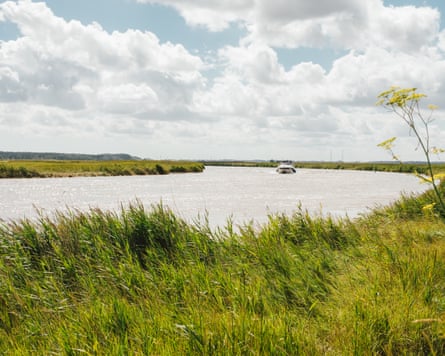
The published plan, which is open for consultation for 28 days, states that the developer will pay £2,675 per house – £42m in total – into the nature restoration fund to cover compensatory actions including fenland creation and restoration, a change in use of agricultural land to semi-natural habitat, catch-dyke restoration and deer management.
But a previous draft of the EDP, seen by the Guardian, set the levy much higher. Ecologists said this was to properly reflect the realistic costs of mitigating the increased nutrient pollution from increased sewage pollution and urban run-off into protected chalk stream rivers – the Wensum, Bure and Yare – caused by the development.
The fee was to be between £5,400 and £60,500 per house, depending on the scale of total nutrient pollution that the development would cause.
The fenlands, marshes, bogs and mires of the Broads are a biodiversity hotspot, home to more than a quarter of the rarest wildlife in the UK such as the otter, cuckoo and fen orchid.
Natural England acknowledges that the new homes will cause environmental harm in the form of physical, chemical, hydrological and biological damage to the habitats and rare species in the Broads from increased nitrogen and phosphorus pollution.
But the EDP states that the payment of the levy and the conservation actions it funds "will materially outweigh the negative effect of the maximum amount of development on the conservation status of each identified environmental feature".
Critics point out that Natural England is being funded by the developer's £42m levy to carry out the works, raising concerns of a conflict of interest.
Environmental lawyers, ecologists and environmental professionals say the levy is too low. They say none of the conservation actions created by Natural England address reducing the nutrient pollution coming from the development.
Analysis of the figures in the EDP reveal that an extra 7,695kg a year of nitrogen will enter the protected waterways, amounting to 83% of the development's pollution load, and up to 435kg a year of extra phosphorus, according Alexa Culver, legal counsel at RSK Wilding.
"Developers will be paying a levy that green-lights more pollution rather than solves the problem – quite literally the definition of 'pay to pollute' or 'cash to trash'," Culver said.
The Norfolk Broads EDP is the first since the Planning and Infrastructure Act came into force. Others will be rolled out to allow development alongside and within some of the UK's most protected sites.
Sally Hayns, the chief executive of the Chartered Institute of Ecology and Environmental Management (CIEEM), said: "It is important to get this right because this first EDP is effectively the blueprint for all the other EDPs targeting nutrient pollution that are going to follow: these are already in preparation and will be coming thick and fast.
"This EDP is an articulation of the government's ambition to deliver a win-win for development and nature through the Planning and Infrastructure Act. We finally get to see what that looks like in practice – and there is real concern."
Hayns said the levy seemed low. "I think there has been a very conservative estimate of how much things are going to cost, with minimal contingency built in."
Not one avoidance measure has been included in the EDP.
Hayns said she was at a loss to understand why recognised solutions to strip out nutrient pollution before it enters waterways, including sustainable drainage systems, and integrated constructed wetlands – pools and marshes to filter out nutrient pollution – had not been included.
"If nutrient pollution gets worse we will end up with choked, poisoned waterways and we will lose some of our most vulnerable and rarest species," Hayns said.
Dr Justin Neal, the head of legal at WildFish, said the delivery plan was full of holes and set up a worrying "pay to pollute" system that was being used to sacrifice countryside for concrete.
"Norfolk's chalk streams and wetlands are protected for a good reason," he said. "The Yare and Wensum, for instance, hold white clawed crayfish and lamprey. They shouldn't be sacrificed on the altar of growth."
Bradley Tooze, the nature restoration fund director at Natural England, said: "The environment delivery plan aims to deliver better outcomes to protect the precious habitats of the Norfolk Broads while enabling sustainable development, including through river restoration measures and wetland habitat creation.
"The consultation on this first plan is now open. We welcome all views on our proposals and encourage stakeholders to share their expertise to help shape this new approach to nature restoration."