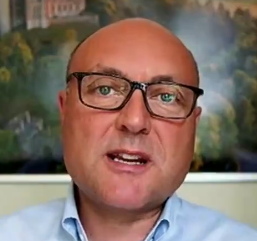
Ben Ramanauskas has worked in academia and as an adviser to the government. He is currently writing a book on the UK economy.
The Shadow Chancellor, Andrew Griffith recently announced that if the Tories were to win the next General Election, that they will halve Employers’ NI for 21-24 year olds. I admire the motivation and thinking behind this: it’s a cut to a very economically damaging tax and it aims to end the NEET crisis by making young people relatively less expensive for firms to hire.
However, this would be a mistake for three main reasons.
It’s worth repeating that National Insurance is a truly terrible tax. It is economically distortionary and increases costs for firms and sole-traders. Rachel Reeves’ decision to hike it was foolish, broke Labour’s Manifesto commitment, and was probably one of the most damaging policies of government in recent memory.
Yet one of the reasons why NI is such a damaging tax is because of all the different rates and bands which apply. It’s a burden to administer and firms and sole-traders act in ways to avoid falling into a different rate or band.
The Tories’ move would create an extra rate which would apply only to a very narrow band of the population. This would add an extra layer of complexity to NI, and make the UK tax system even more difficult – and costly – for firms to comply with and for the state to administer.
Once this extra rate is in place, it would be very difficult to remove it and it opens up HM Treasury to demands for even more rates and exemptions later down the line. We have seen the same thing with the VAT system. Rather than a single, standard rate uniformly applied, the system is riddled with different rates and exemptions, with various campaigns arguing that a certain product or service should not attract VAT. We’d likely see the same with NI. Complexity leads to even more complexity.
We do not know what the future holds. Labour market prospects for young people don’t look set to improve anytime soon – but they might. If that happens, then the new rate would be inappropriate, and would be politically difficult to remove.
We also don’t know what crises are lurking and which will need a response from the Exchequer to protect the public finances. This is why flat and broad taxes work best, as they can be raised or lowered without disproportionately impacting one demographic.
It will also be an expensive move. While NI is an economically damaging tax, it is a big revenue raiser for the government and it is one of the many reasons why Rachel Reeves was wrong to rule out raising any of the ‘Big Three’ taxes on working people. While the Conservatives have rightly pledged to make spending cuts, this has proved notoriously difficult for past governments. Such a move while the public finances are still in a parlous state seems unwise.
This is not to say that nothing should be done to end the NEET crisis. Far from it. The next Conservative government should take bold steps to repair the labour market and improve the life chances of young people.
It should start by reversing Rachel Reeves’ hike to Employers’ NI.
As discussed above, it has been incredibly damaging and should be reversed. Should a move lower employment costs for firms and encourage them to get hiring again. Crucially, this would apply across the board for all age ranges. This is important, because currently the focus is rightly on the under 25s who have never worked.
The issue is that these young people are going to soon grow up, and so we could be in a position where we have people who are under 30 and have never worked, living instead a life entirely on welfare. It would also cover the growing number of people between 55 and the State Pension Age who are facing long-term unemployment and who wouldn’t benefit from the Tory’s proposal. Such a move would benefit all ages without adding additional complexity to the tax system.
The Employment Rights Act (ERA) should also be axed. This has been frequently cited by businesses as one of the main reasons why they are reluctant to hire new people. In particular, it increases the risks associated with taking a chance on people who have never worked. Scrapping the ERA would deal with this problem and make firms more willing to take a punt on something with limited experience or who might find readjusting to working life difficult.
The Conservatives should, however, call for one bold and targeted measure to support the employment prospects of young people: the abolition of the Minimum Wage for under 25s. Such a move would reflect the urgency of the NEET crisis. It would also acknowledge that those over 25 tend to face higher costs and so some form of wage floor would be more appropriate.
Ultimately, the next Conservative government needs to resist the urge to muck about with the tax system. Instead it should focus on simplifying it. This should involve comprehensive reform which sees the different rates of NI abolished before it is merged with Income Tax.
It is encouraging that Andrew Griffith is serious about addressing the NEETs Crisis and recognises the role played by Employers’ NI in creating it. The proposal demonstrates good instincts, yet will increase tax complexity while doing little to solve the crisis.
The Conservatives should be even bolder by repealing the Employment Rights Act, scrapping the Minimum Wage for under 25s, and committing to eventually abolishing National Insurance for everyone.