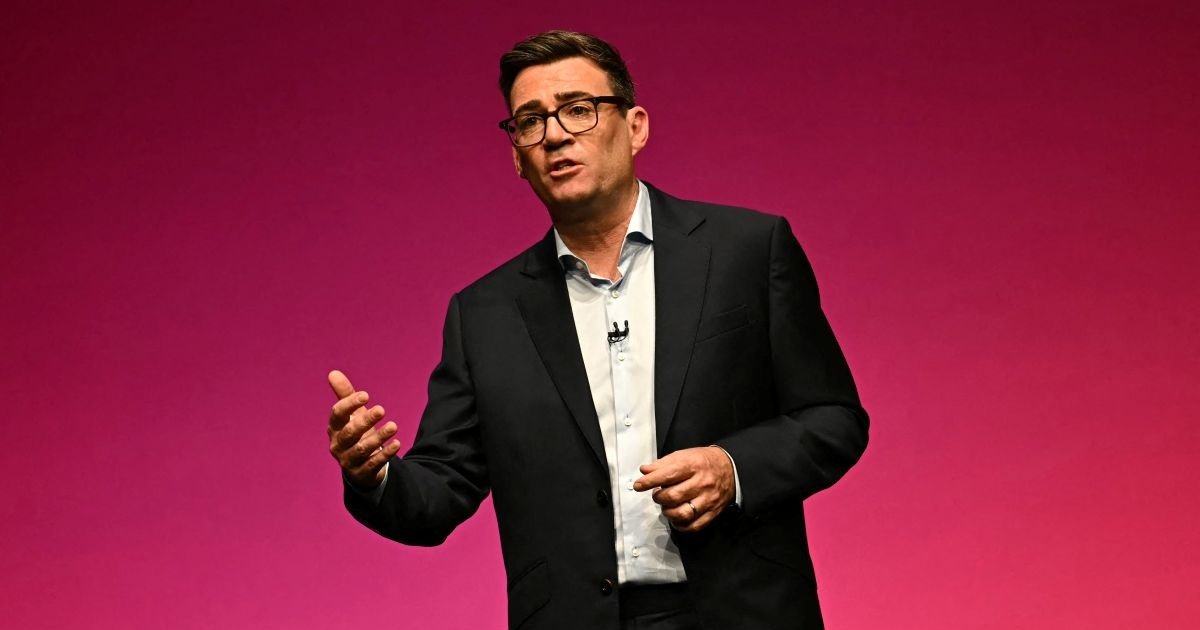
Andy Burnham has given his first conference speech as leader of the Labour Party and Prime Minister.
Speaking in Liverpool on Tuesday (29 September), he made a number of key pledges, including commitments to end the pensions ‘triple lock’ from 2030, introduce new leasehold reforms and launch a National Care Service.
Join 75,000 newsletter subscribers who trust us to check the facts
Sign up to get weekly updates on politics, immigration, health and more.
Subscribe to weekly email newsletters from Full Fact for updates on politics, immigration, health and more. Our fact checks are free to read but not to produce, so you will also get occasional emails about fundraising and other ways you can help. You can unsubscribe at any time. For more information about how we use your data see our Privacy Policy.
We’ll be taking a closer look at the small print of these pledges and adding some of Mr Burnham’s commitments to our Government Tracker in the coming weeks.
For now, we’ve examined some of the claims made by Mr Burnham in his speech, including on energy bills, housing and hospital discharges.
While people in England, Scotland and Wales will see a VAT cut on Thursday, this isn’t right for people living in Northern Ireland.
In Great Britain, the plan involves cutting the VAT rate on domestic electricity bills, and the bills of some small businesses, charities and care homes, to 0% for six months from the beginning of October. But HMRC’s policy paper explaining the details explicitly says: “In Northern Ireland, qualifying supplies of electricity remain liable to VAT at the reduced rate of 5%.” And when we asked Downing Street about Mr Burnham’s comments, it confirmed this was the case.
As the Prime Minister’s original announcement explained, this is because the EU’s VAT rates apply in Northern Ireland under the terms of the UK’s Brexit deal. Instead, the Northern Ireland Executive “will receive comparable funding to enable it to support NI Households with the Cost of Living”.
Northern Ireland’s Department of the Economy announced earlier this month that households will receive a single £63 discount on their electricity bill from 6 October (though this figure also includes some previously agreed funding not related to the VAT reduction). The scheme is “not means tested or based on consumption”.
Mr Burnham made a somewhat similar claim to this earlier this month, but in more definite terms—he claimed then that “household energy bills” are “the highest in Europe”, and we said we couldn’t find official data on bills to support that.
His claim on Tuesday was more broadly worded, however.
As we explained in our previous fact check, UK domestic electricity unit prices are among the highest in Europe, but gas prices are generally below the median. In 2024, the UK’s industrial electricity prices were the highest among International Energy Agency (IEA) members providing figures, but a number of other countries had higher industrial gas prices.
It’s true that on 20 July, the day he became Prime Minister, Mr Burnham said his “first instruction” was to “end rough sleeping in our country”. This is a pledge which we’re already monitoring via our Government Tracker.
Though funding has been announced and the government said in July it was taking “immediate action”, we’re rating the pledge as ‘wait and see’ for now because it’s too early to say how levels of rough sleeping have changed in England since the pledge was made.
The graph below shows the latest estimates of the number of people in England who are rough sleeping, up to June 2026.
We don’t know exactly which statistics Mr Burnham had in mind here, but if he was talking about the latest figures from the Ministry of Housing, Communities and Local Government, then they say that in England: “There were 1.34 million households on local authority housing registers (commonly known as waiting lists) at 31 March 2025.”
Obviously that figure’s now 18 months old, and it doesn’t include people on waiting lists in Scotland, Wales and Northern Ireland, where housing policy is devolved.
It’s also a count of the number of , not the number of people. In practice, every household will have at least one person in it, but some will have several more. (Conversely, some people might be on a waiting list with more than one local authority.)
The official statistics say that the 263,000 households who got a new social housing letting in 2024/25 “equated to approximately 502,000 people”.
This estimate, which Mr Burnham mentioned as he spoke about social care, is likely to be correct. But we’ve not immediately been able to find data which shows exactly how many of the patients who are in hospital despite being well enough to leave are “older people”.
NHS England regularly releases data on the number of hospital patients with ongoing care needs who meet the criteria to be discharged but still remain in hospital (known as ‘delayed discharge’).
Its latest figures show that as of 31 August, 12,168 adult patients were still in hospital despite being medically fit to leave. The NHS doesn’t break this figure down by age, though earlier this year Age UK said these types of patients were “overwhelmingly older people”.
There are many reasons why these discharges might be delayed other than “the lack of good home care”, and we don’t know what data Mr Burnham was relying on when he made this claim—we’ve asked Downing Street and will update this round-up if we hear back.