, the health secretary, has announced a Sure Start-style Healthy Babies programme for every local authority in England. the details here.
In her speech to the Labour conference, said:
Since the election, Bridget Phillipson and Lucy Powell have been working to rebuild family hubs across the country, bringing back support for parents and for young children.
But something is missing. In half of communities, compared to the last time round, the healthy babies services – mental health support for mums and dads, the feeding and bonding support for your new baby.
That changes now.
I can announce we will bring back the Sure Start health services into every family centre.
Reaching up to 1,000 hubs over the next two years.
One of the Labour party's greatest achievements restored to families throughout the land.
So listen to that, George Osborne – Sure Start's back.
That was a reference to an exchange Cooper had with George Osborne when she was interviewed by him over the summer for his podcast, Political Currency. As Tory chancellor, Osborne cut the funding for Sure Start, which Cooper helped to set up as a junior minister in the Blair government. Osborne now runs his podcast with Ed Balls, Cooper's husband.
As the Tories ran down the Sure Start programme, they were replaced by family hubs. When Labour took power in 2024, these were beefed up as Best Start family hubs.
Sure Start is now widely regarded as one of New Labour's most successful social programmes. A report by the Institute for Fiscal Studies said that it had a significant positive impact on the health and educational outcome of children. "For every £1 of net spending, Sure Start may eventually generate around £11 in benefits for the children who attended," the IFS said.
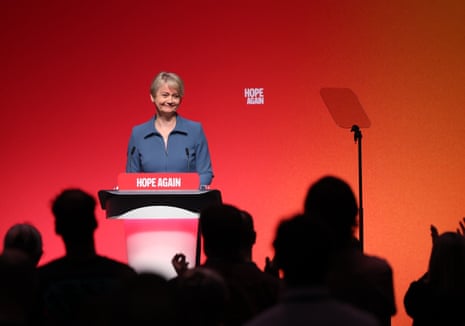
also announced that the government is setting up a new pension scheme for workers in the care sector in her speech to the Labour conference.
The health secretary said:
We will deliver the first-ever legally-binding fair pay agreement for care workers with minimum standards of pay and conditions across every employer, because care workers have been undervalued and underpaid for far too long.
We will publish a proper workforce plan for social care, proper career pathways, training, development of specialist skills.
We'll offer thousands more academy places to help young jobseekers into good jobs in care, and thanks to the campaigning of all the Unison members in this hall, we will go further because it is just wrong that the people who work hardest to help others maintain dignity and respect in old age too often get nothing back from retirement themselves.
So, I can announce today we will introduce the first ever national collective pension scheme for workers in the care sector – fair pay, fair terms and conditions, and now a proper pensions scheme.
Cooper also said the government will appoint a new champion for unpaid carers to make sure the "voice of that hidden army is always heard in government".
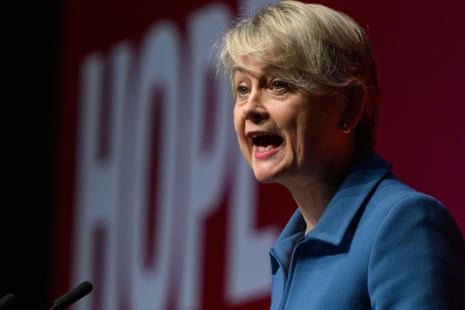
The Conservatives have ruled out supporting Andy Burnham's proposed cross-party commission to work on electoral reform.
In an interview with Sky News, , the Tory chair, replied with a clear "no" when asked if his party would take part.
Hollinrake went on:
We think this is totally the wrong thing, despite the fact under any system of proportional representation, we'd have got more seats than we did in 2024, in that election.
That's not the point. The point is you want decisive elections.
The public had a referendum on proportional representation back in 2011. It rejected it.
And we're in an era now potentially moving into an era of sectarian politics, where you have small parties that represent particular interests, be it Gaza, be it Jeremy Corbyn's Your Party.
Does anybody think it'd be a good idea for a government to be propped up by one of those parties who have single issue policies that really would be potentially very damaging to the UK itself and to our foreign relationships?
In fact, the referendum in 2011 was on the alternative vote – which is not strictly a proportional voting system, even though in UK politics it would deliver a more proportional outcome in some elections.
, the health secretary, has announced a Sure Start-style Healthy Babies programme for every local authority in England. the details here.
In her speech to the Labour conference, said:
Since the election, Bridget Phillipson and Lucy Powell have been working to rebuild family hubs across the country, bringing back support for parents and for young children.
But something is missing. In half of communities, compared to the last time round, the healthy babies services – mental health support for mums and dads, the feeding and bonding support for your new baby.
That changes now.
I can announce we will bring back the Sure Start health services into every family centre.
Reaching up to 1,000 hubs over the next two years.
One of the Labour party's greatest achievements restored to families throughout the land.
So listen to that, George Osborne – Sure Start's back.
That was a reference to an exchange Cooper had with George Osborne when she was interviewed by him over the summer for his podcast, Political Currency. As Tory chancellor, Osborne cut the funding for Sure Start, which Cooper helped to set up as a junior minister in the Blair government. Osborne now runs his podcast with Ed Balls, Cooper's husband.
As the Tories ran down the Sure Start programme, they were replaced by family hubs. When Labour took power in 2024, these were beefed up as Best Start family hubs.
Sure Start is now widely regarded as one of New Labour's most successful social programmes. A report by the Institute for Fiscal Studies said that it had a significant positive impact on the health and educational outcome of children. "For every £1 of net spending, Sure Start may eventually generate around £11 in benefits for the children who attended," the IFS said.
Back to Europe, and here is 's assessment of the various options available as Andy Burnham looks for a better relationship with the EU.
, the environment secretary, announced plans for half a million trees to be planted in England in the next three years to protect against extreme weather. has the details.
also announced plans for a Good Food Neighbourhoods Programme. She told the conference.
During our years in opposition, Britain became a poorer, more divided country. A country that seemed only to work for vested interests.
That's why today, I'm announcing our Good Food Neighbourhoods Programme. Initially we'll be supporting 45 communities - targeted at the areas with the highest levels of food inequality. Backed by £10m of investment, bringing fresh, affordable produce into neighbourhoods.
Creating community kitchens and supporting pensioners' lunch clubs that tackle loneliness and hunger side by side. Because this is about more than what's on someone's plate. It's about the ties that bind us together.
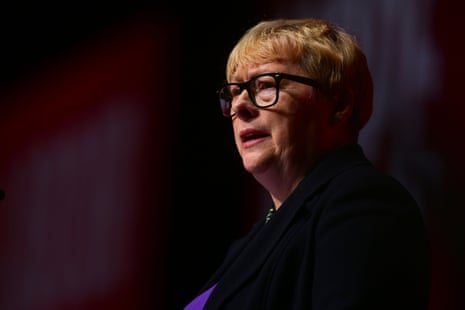
The Conservatives have accused of going back on a byelection pledge not to consider rejoining the EU.
During the byelection in Makerfield, a constituency that strongly voted leave in 2016, Burnham said that the Brexit vote should be respected and that, if he was elected, he would not propose rejoining the EU.
But Burnham has now said this option should be considered. (See 7.49am.)
In response to Burnham's Today interview, said:
You cannot trust a word Andy Burnham says. Just a few weeks ago he said he wanted to move on from the Brexit arguments and now he is dragging Britain back into them by floating the prospect of rejoining the EU.
Labour cannot blame a democratic vote from over a decade ago for the consequences of their own economic decisions. While they look backwards, the Conservatives will look forwards.
has said that he has spent "a lot of time" working out how to fill the £4.7bn gap in the plans to fund the defence investment plan.
When Keir Starmer unveiled the defence investment plan in June, after he had announced he was standing down to make way for Burnham, he said the increased investment would cost £15bn. While explaining where most of the money would come from, he said the remaining funds – worth £4.7bn over four years – would have to come from savings to be announced in the budget.
In an interview on Times Radio, Burnham said that finding this money had been a "major priority".
He said:
I said as soon as I came in that we would fully fund the defence investment plan. I've spent a lot of time on that and it will be fully funded.
There was a shortfall - there won't be [at the budget].
has suggested that it would not be legitimate for a party to form a majority government with less than 30% of the vote.
In his Today interview, asked why he wanted electoral reform and a move towards proportional representation, Burnham replied:
I found it better being elected under a different system as mayor of Greater Manchester, where people had one or two, they could put that on the ballot paper.
Because you had a reason to stop on every doorstep and chat to people who might not always support your party and try and get their second preference.
It just led to a better politics.
And I also feel that in an era of five party politics, can we really watch a party with less than 30% just walk into Downing Street? Is that something we should feel comfortable about?
As mayor of Greater Manchester, Burnham was elected under the supplementary vote system. This means, if no candidate gets more than 50% when the votes are counted, the top two go into a run-off and then second preferences are taken into account.
When it was put to Burnham that he was just saying that because he wanted to stop Nigel Farage becoming prime minister, Burnham replied:
No, it could happen with any political party. It's whether that would be a legitimate government.
In the 20th century, when two-party politics was the norm, parties that went on to form a government normally had at least 40% of the national vote – and sometimes a lot more.
But, with the revival of the Liberals, and then the Lib Dems, the success of nationalist parties in Scotland and Wales, and now the emergence of the Greens and Reform UK as significant parties, it would now be quite possible for a party to win a Westminster majority with under 30% of the vote.
At the last election, Labour won a landslide victory with just 33.7% of the vote.
has said that it is "completely wrong" to claim that he is picking on pensioners with the plans he announced yesterday.
When this claim was put to him in an interview on ITV's Good Morning Britain, Burnham replied:
I think you've got it completely wrong really, if you don't mind me saying, to put it like that, because I have put out … a vision for a national care service.
There are pensioners out there who watch your programme who are paying for care costs from their basic state pension. Now, is that right or fair?
We have to fix this system. But what I'm saying about the triple lock enables a better support, better care for people in their homes. No care charges.
So, please let me just make that point that people need to see these things in the round. It's a better deal for older people going forward.
Household energy bills in Great Britain are predicted to soar by £276 a year for the typical household from January as the impact of the Middle East war continues through the coldest months of winter, reports.
In his Today interview, also said that he thought Britain needed to resolve what its relationship with the EU should be because it could not afford another decade of drift.
He explained:
What I am saying is it's not good enough to leave that question just hanging.
I am saying, let's be clear about where we want Britain to go in the next decade. And I've asked people to join with me on that.
The country cannot have a decade, another one like the one we've just had, where we've had too much drift, too much division.
I am very clear, and I will say this bluntly, Brexit has caused more harm than good and I think around 60% of the British public agree with that statement.
So the question is what do we do about that?
And I'm not doing the usual politician thing. I'm being honest about facing up to that, and give people options that they can look at and judge.
Here is more detail on what said about the possibility of rejoining the EU when he was being interviewed by on the Today programme.
When Robinson put it to Burnham that ideally he wanted to rejoin, paused before saying: "I want to look at the options."
said that was a long pause, and it sounded as if he meant yes, but did not want to say so.
replied:
I have said it, there's no point me denying it, I've said in the book I would like to see Britain rejoin in my lifetime. So there was no point saying otherwise.
But it's not necessarily the case that is now. Because we need to understand what would be the nature of how we would look at the different options.
Burnham then set out four options; the status quo, joining a customs union, joining a customs union and the single market, or rejoining. (See 7.49am.)
Burnham seemed to be referring to his book, Head North, which he co-wrote with Steve Rotheram. In that, they set out an extensive plan for political reform. But they did not say much in it about Brexit.
However, Burnham did declare last year that he wanted the UK to rejoin the EU in his lifetime.
He is now 56.
has said that it is not accurate to say that he is getting rid of the pensions triple lock.
In interviews this morning, he challenged this description because the plan he announced yesterday means that the value of the state pension will continue to rise in line with prices, earnings or 2.5%.
But under the current system, pensions rise every year either by 2.5%, or by inflation, or by the annual rise in earnings – which is highest.
After 2030, normally they will rise by 2.5% or by inflation. But if that is not enough to ensure that pensions have risen in line with the average increase in earnings since the policy was introduced, they will rise by that amount.
The pensions triple lock is not a benefit; it is an uprating mechanism, and what Burnham announced means that the earnings element of that mechanism will apply according to a new formula.
The change will save money because, under the current system, if the rise in earnings is particularly big one year, as sometimes happens, there is a rachet effect, and the increase gets baked in for future years.
Burnham told Times Radio:
The decision on the triple lock, the adjustment – and it is an adjustment – it's not getting rid of the whole concept of the triple lock.
has said that the government does not have "huge room for manoeuvre" as it looks at how it can help people with the cost of living.
In his interview with BBC Breakfast, Burnham said:
We're thinking all of the time, 'how do we take a bit of pressure off people, give them some breathing space?'
It's why one of the first decisions I took as prime minister was to remove VAT off electricity bills, and that will happen on Thursday …
We'll do something to help people with bus fares next year, the £2 cap for the whole of the year, and then in the budget we will consider further measures.
It's important for me to say that we don't have huge room for manoeuvre.
I think people can see that when they look at the financial picture, but within that we will do our best, and we'll also try to support people who are struggling with the cost of doing business 'cause it's hard to run a business right now as well.
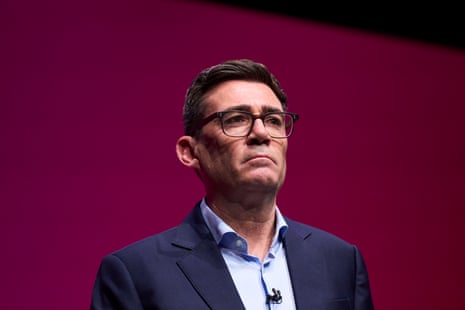
has said that he accepts there will could be an energy crisis this winter.
In his interview with the Today programme, Burnham was asked if he agreed with , CEO of the energy company EDF, who told the programme in an interview that Britain was "walking into a second significant energy crisis after the one we experienced just four years ago".
Asked about the comment, said:
I don't think that is an overstatement to be honest.
The situation was "very challenging" for people buying petrol, or heating their homes, he said.
I'm doing what I can, removing say VAT off bills. But it is very difficult indeed, and it's why the Middle East situation needs to command a lot of our attention.
Asked what he might be able to do to help people, Burnham told BBC Breakfast:
I'm considering everything that might help people in very difficult times and I will be honest and say every possible measure is being looked at.
The question I've got is, how many can I afford, what can we do given the state of the public finances?
And people wouldn't thank me for making unfunded payments that then cause pressure on mortgages – and we've seen that in the past and we're not going back there.
Burnham said, when he talked about considering every possible measure to help with energy costs, that included looking at whether to scrap a fuel duty increase planned for next year.
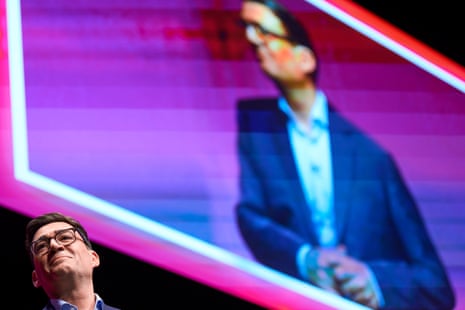
Good morning. 's speech is getting a mixed review in the papers, but there is general consensus that it is a consequential one – not one that we will have forgotten within a fortnight or so, but one that will make the next list of all-time important Labour conference speeches of the last 50 years.
If you are still catching up, here are three good places to start.
's overnight splash for the Guardian.
's take in comment.
The s view in its editorial.
The conference wraps up today, with four cabinet ministers speaking. But much of the attention will be on digesting the significance of what the PM said yesterday.
Burnham has given a series of interviews which are playing out this morning. Speaking to the Today programme, Burnham confirmed that, when he told delegates yesterday he would be looking at ways of having a better relationship with the EU, rejoining would be one of the options.
said:
We could stay as we are. That's definitely an option, if people think this is the right place to stay.
We could look at what [former Conservative chancellor] George Osborne has said about a customs union, we could look at what the Liberal Democrats said at their conference about the single market or we could go all the way.
There are clearly options that need to be considered, and we have to look at what is doable and what would be the pros and cons of each.
I will post more from his interviews soon.
Here is the agenda for the day.
9.30am: The conference opens.
9.45am: Angela Eagle, the environment secretary, speaks.
10.15am: Yvette Cooper, the health secretary, speaks.
11.10am: Lisa Nandy, the culture secretary, speaks.
12.10pm: Lucy Powell, the deputy leader, gives the final speech of the conference.
I'm afraid we are no longer able to have comments open below the line every day on this blog. If you want to contact me, please email politics.live@theguardian.com. You can use this email to flag up corrections, comments for publication, questions or complaints.